SHAPING A NEW DESTINY


Theatre is a conversation. 


As artists we are moved by a relentless desire to keep the conversation going. We wish to connect; to reach; to examine; to reveal; to poke; to provoke; to feel… 

I have recently learned from poet David Whyte that the word ‘conversation’ comes from Latin: “converse/to turn about/inside out”. It’s a gorgeous concept; a conversation is turning things inside out.  The whole point of what we do in the theatre is to inhabit someone else’s perspective; to learn about somebody else’s experience; to turn ourselves inside out, and in turn, we turn YOU inside out. What a stunningly hopeful thing theatre is, when one really thinks about it… 


Our trade is an incredibly challenging and economically precarious one, but so vital – particularly considering how the world has transformed itself in the last two decades. We have expanded into a “global village” and lost the immediacy of community, and we are now dealing with the consequences of that expansion as our conversation breaks down. We seem to be stuck; hoping and waiting, like characters in a Beckett drama.   


How do we heal from that?   


It is time to turn ourselves inside out again. It’s time to dare to share our desires and vulnerabilities without fear – it’s time we wrote a new story for us; a new story for humanity that values collective intimacy and community above all; a new destiny!   


MACBETH and WAITING FOR GODOT were written so long ago. And yet here we are, turning them inside out, yet again; trying to once again make sense of what they were saying when they were first written, and finding new meanings and connections for them now – and in that way, we are reshaping those plays (and ourselves) for the future.   


I’ll see you at the park for a great conversation! 


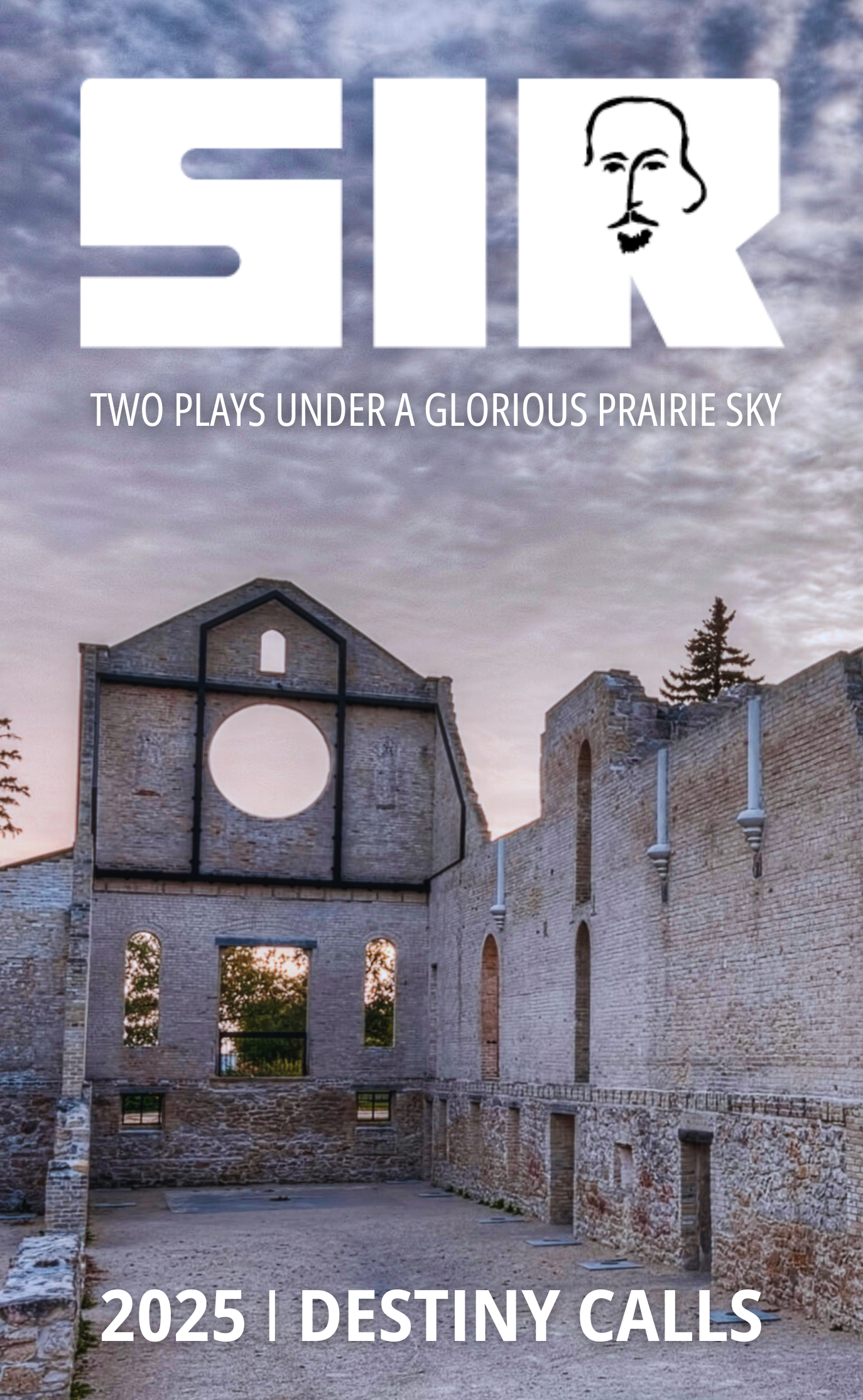
SIR’s 2025 season confronts the question of destiny with two towering works that illuminate the tension between fate and free will. In Macbeth, Shakespeare’s tragic hero hurtles toward a foretold future he cannot escape. In Waiting for Godot, Beckett’s vagabonds linger in limbo, suspended between hope and inevitability. Together, these plays ask: do we shape our own paths, or are we merely following the stars?


This digital newsletter is your invitation to step into the heart of the season—through interviews, artist web chats, curated playlists, and more.


The Director’s Chat


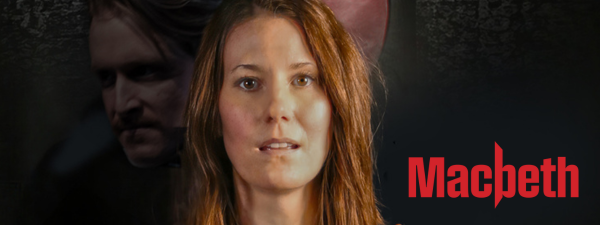
Artistic Director, Rodrigo Beilfuss & Macbeth Director, Emma Welham discuss her vision for bringing Shakespeare’s story of destiny foretold and fate fulfilled to the Ruins.


Defying the Original


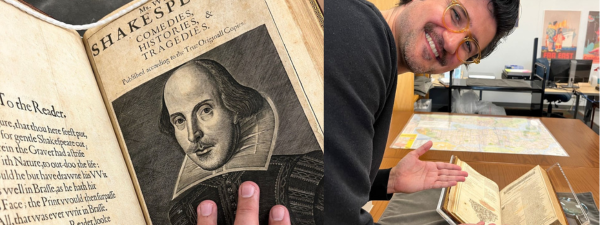
Workshopping translations & meditations on Shakespeare as a cultural bridge. A paper for The 2023 First Folio Symposium by Rodrigo Beilfuss.


ON MACBETH & HORROR

by Lauren Chochinov


Of Shakespeare’s many plays, Macbeth is, perhaps, the one most closely associated with horror. Yes, Hamlet has its ghost, but Macbeth’s witches dominate stage and screen adaptations of the tragedy. Witches are, of course, a common trope of horror literature and film. And while Macbeth’s witches certainly belong amongst the list of literature’s greatest, the play contains far more horror genre connections than just The Weird Sisters.


“Horror” as a genre, came into prominence at the end of the eighteenth century with the Romantic literary movement. While stories of ghosts and vampires are prevalent in nearly every culture and in every age, the development of the Gothic formalized what had previously existed for centuries into a coherent literary genre with conventions and recognizable features. Macbeth, usually dated to 1603, obviously far predates the Gothicism of early nineteenth-century Europe, but in many ways, it is a perfect example of the Gothic in action, a foundational work whose influence cannot be overstated.


Bloodied soldiers roam a broken landscape. Witches lurk in storms. Characters sneak in and out of darkened castle hallways. A woman loses her mind culminating in tragedy. There would be no Jane Eyre, no Wuthering Heights, no Jekyll and Hyde without Shakespeare’s Scottish play.

With the advent of cinema, horror exploded in popularity, the genre dividing into countless subgenres, each with its own tropes and parameters. Amongst these is “folk horror,” which emerged throughout the 1970s in British cinema with films like Witchfinder General (1968), Blood on Satan’s Claw (1971), and the genre defining The Wicker Man (1973).

Folk horror, at its most simplified, is horror that incorporates aspects of folklore. More accurately, folk horror is concerned with ideas of the past reemerging in the present. It is usually set in rural environments and heavily features the natural world, pre-Christianity, and the intrusion of modernity. Like many horror subgenres, “folk horror” has only grown in popularity as filmmakers around the world have mined their cultural folklore and turned it into the stuff of cinematic nightmares. At its heart, folk horror is obsessed with idea of encroachment, of a buried past emerging to consume the present – either as an act of vengeance or as a reminder that humanity is powerless against the force of nature.


Macbeth is a play at odds with nature. Its characters constantly speak of weather, of the night. Before meeting the witches for the first time, Macbeth remarks, “so foul and fair a day I have not seen” (1.3.39). On the morning following Duncan’s murders, the nobleman Lennox explains that the previous night had “been unruly.” He describes “lamentings heard i’ th’ air, strange screams of death/and prophesysing” (2.3.61-69). The king’s horses break free of their stable and cannibalize each other while Macbeth and Lady Macbeth call to the darkness and shun the light. By murdering Scotland’s rightful king and usurping the throne, Macbeth defies his own natural state – corrupting the social hierarchy, which, in turn, brings chaos.


Folk horror’s obsession with encroachment and return provides a fascinating lens to consider Macbeth and Lady Macbeth throughout the remainder of the play. From the moment Macbeth murders Duncan, he is haunted by his actions. There is a sense that Duncan’s death and the subsequent murder of Banquo are the true ghosts of Macbeth – a lurking, omnipresent horror that reveals itself in blood and madness. The play’s constant use of personification to signify how the natural world reacts to the actions of its human inhabitants is one of the hallmarks of folk horror. Scotland bleeds as Macbeth tyrannically cuts down his enemies, “each new morn/New widows howl, new orphans cry, new sorrows/Strike heaven on the face, that it resounds/As if it felt with Scotland, and yelled out/Like syllable of dolor” (4.3.3-9).


The genre’s great strength has always been its ability to mirror the societal concerns of its moment. Macbeth is a time capsule of a nation experiencing change. With the death of Elizabeth I in 1602, England found itself with a Scottish king upon the throne. James I (VI of Scotland) brought with him much needed stability in the form of his family – he already had heirs at the time of his ascension, unlike Elizabeth whose lack of children was a constant point of anxiety for England. Interest in Scotland and all things Scottish flourished in the early years of the king’s reign, a king who was notoriously obsessed with witches and believed himself descended from the quasi-historical Banquo.


For Shakespeare, whose livelihood depended on the king’s patronage, Macbeth is purposefully crafted play, undoubtably written with James in mind. A story set in Scotland, about kingship and power, that concludes with the ascension of Scotland’s rightful heir to its contested throne. Not to mention the witches. But by pandering for favour, Shakespeare inadvertently lay the foundation of a new genre that would dominate literature and, eventually, cinema well into the twenty first century.


Shakespeare, W. (n.d.) Macbeth. The Folger Shakespeare. https://folger.edu/explore/shakespeares-works/macbeth


Waiting for Godot: A Playlist for the Absurd and the Eternal


Nothing happens. Then it happens again. This playlist traces the strange emotional arc of Beckett’s Waiting for Godot—a journey through silence, stasis, absurdity, friendship, and the quiet ache of existing.


From bleak beauty to surreal repetition, from soft dread to fleeting joy, these songs live in the space between arrival and absence. They wait with you. They loop. They linger.

Best listened to in order. Boots on. Hats on. Let’s go—we can’t.


Macbeth: A Folk Horror Mixtape


Step into the shadowed moors of Scotland, where prophecy crackles like thunder and fate hangs heavy in the air. This playlist traces the arc of Macbeth—not as a retelling, but as an atmospheric journey through music.

Beginning in mystery and foreboding, we follow the slow spiral of ambition into madness, through spectral hauntings and burning guilt, down into blood-soaked consequence and eventual collapse. The songs—drawn from folk, rock, blues, and cinematic soundscapes—don’t just illustrate the play’s moments; they breathe with its themes of destiny, nature’s revenge, and the fragile human psyche.


By the end, the storm clears—but not without leaving scars. A final stretch of reflection, strange beauty, and quiet reckoning reminds us: in Macbeth, as in life, the past always echoes.


Listen in order. Let the witches lead.

Previous Newsletters

December 15, 2024
I hope you’re ready for a proper great time.  At SIR we believe that Joy is vital to navigating a persistently volatile world, a “distracted globe” – as Bill once wrote. This season promises a restorative time in nature, as your ears are tickled by beautiful, transformative language; and your senses are reawakened to serenity and wonder! Our choices for the upcoming season embrace the theme of transformation. These plays celebrate our ability to adapt, to embrace magic and storytelling, and to ultimately change, as individuals and communities. My fellow (but much more famous) South American, the revolutionary Che Guevara once said: “let the world change you, and then you can change the world”. I love this quote because it implies a surrender – a leap of faith. In other words: magic. It is an invitation for us to be open and to stay curious about the possibilities and surprises of life. For the first time since 1995, A Midsummer Night’s Dream will return to the Ruins and deliver that much-needed jolt of magic you’ve been craving. Playing in repertory alongside Dream, we will once again celebrate a new Canadian play: Iago Speaks , by Saskatoon’s incredible Daniel Macdonald. This cheeky and highly intelligent sequel to Othello isn’t afraid to ask the big existential questions that haunt us – and it does so with a spectacular sense of humour and charm. Join us at the Ruins this summer to have your expectations both shattered and met! Be surprised, puzzled, delighted and ultimately… Be transformed.
December 15, 2023
2023 Newsletter SIR’s 2023 season is about collaboration and celebration, with two distinct and delightful productions: Twelfth Night , arguably Shakespeare’s finest comedy, is filled with revelry and longing; while The Dark Lady , a world premiere of a new work by Jessica B. Hill is a dynamic duet that dismantles our conventional views on Shakespeare through the perspective of poetess Emilia Bassano – the possible ‘dark lady’ that appears in his sonnets. This ‘digital newsletter’ is your invitation to become intimately acquainted with this season through audio interviews, web chats, playlists & more.
April 26, 2022
2022 Newsletter
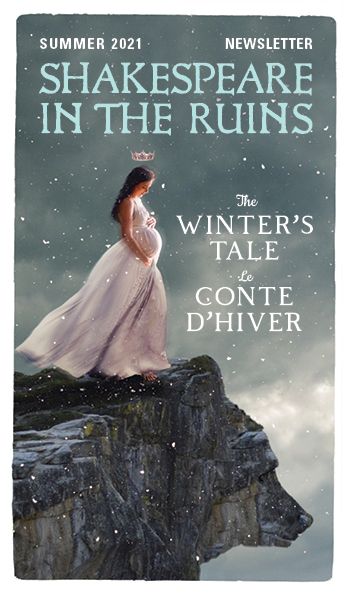
April 20, 2021
2021 Newsletter
April 11, 2019
2019 Newsletter
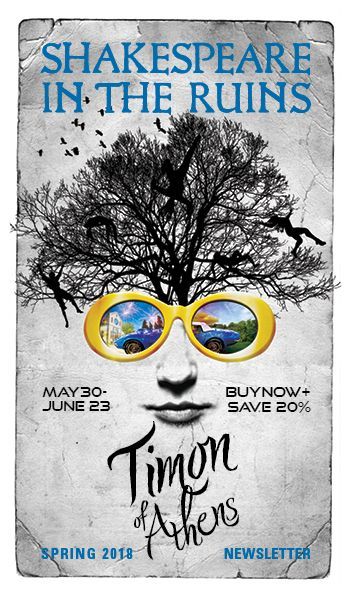
April 30, 2018
2018 Newsletter
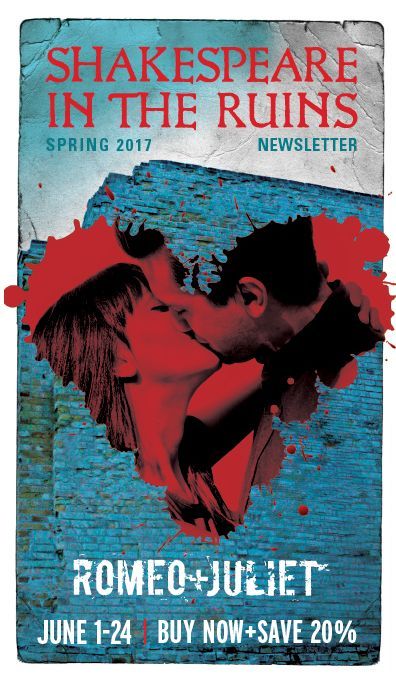
April 20, 2017
2017 Newsletter
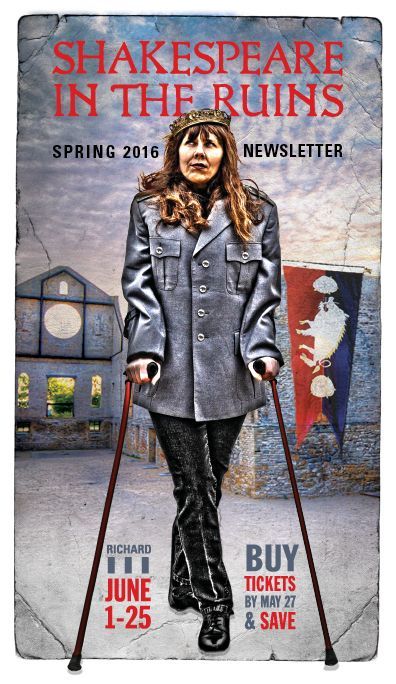
April 20, 2016
2016 Newsletter