

I was maybe six or seven when I fell in love with Shakespeare. Repercussion Theatre, our Montrealer’s version of SIR, would put on plays every summer in the park behind my house. I’d show up an hour early with my parents, equipped with a thick blanket and snacks, eager to secure my front row seat. I’d marvel at the preshow rituals, watching as actors and technicians set up. There was something so special about that liminal state of pre-show, intermission and post-show: the behind the scenes, the in betweens, where it seemed the magic seeped off the stage and poured into the real world. I was always so certain I’d encounter a fairy in the park on my walk home, or I’d feel every tree becoming Birnam wood and suddenly took off in a sprint to get home faster. All that to say, yeah, I’ve been a Shakespeare nut since childhood. I gave myself the challenge of reading all his Sonnets last winter in preparation for rehearsal for a play at the Stratford Festival. When I arrived at the Dark Lady sonnets, I suddenly realized how one-sided his portrayal of this woman truly was. How blinded by jealousy he was. How violent some of those poems actually are. It was a whole other side of Shakespeare we never really talk about. How strange and petty it is to write such brilliantly rhyming hate poetry. Who hurt you Bill? What was the relationship like before all the pain? What’s HER side of the story? You went on to become The Bard but no one knows who she is! I went on an exoneration quest. I did some research on Emilia Bassano, she’s said to be the closest contender for the “Dark Lady.”She came from a family of talented musicians. She was Italian, Jewish, possibly of North African descent… It was all fascinating. But it wasn’t until I read her poetry (because yes, she wrote too) that the floor caved out from under me. She was the first Englishwoman to publish her work as a professional poet. Her book of poems is filled with letters of appeal to powerful women. She wanted to create a community of women patrons, supporters and readers, at a time when such a concept didn’t even exist. I’ve spent the pandemic falling in love with Bassano and what she was desperately trying to do. And my curiosity about her has been a catalyst towards wanting to unearth all women who’ve been lost to the dark. Strong, opinionated, pioneering women have been silenced and hidden throughout history. We now have a brilliant opportunity to pull them out of the dark and give them the acknowledgement and place the’ve always deserved. I’m hoping both The Dark Lady and this series of webinars can help do just that. by Jessica B. Hill, Playwright SIR plans to produce The Dark Lady as part of our 2022 season. Please visit our website and check out the webinar series ‘Expanding the Canon,’ also created by Jessica.

Q: WHAT DO YOU LIKE BEST ABOUT VOLUNTEERING FOR SIR? Rory: getting to see the ruins, and helping set up the chairs. Kiara: seeing the actors after the show and being able to talk to them! Luca: helping others get to see the show. Don: seeing a different take on favourites like Hamlet. Nicole: love seeing how the play is adapted to work within the ruins setting, as well as some modern twists (like the chess game instead of the full fight scene!) Q: WHAT KEEPS YOU COMING BACK? Rory: to be in the ruins! Kiara: to see the next show! It’s fun! Luca: to help more, and see what the next show is like! Nicole: every play is so different, I can’t wait to see what they come up with next! Don: see the next spin on other classics. Q: TELL US ABOUT YOUR EXPERIENCE VOLUNTEERING AS A FAMILY. Luca: getting to experience the art of Shakespeare with your family. Don: sharing your favorite plays with your children. Nicole: Hamlet has always been one of my favourite plays, and (while I meant to wait until they were older for that one), it was really awesome getting to see their first watch of the play, and fall in love with it too! Q: AS A PARENT, WHY IS VOLUNTEERING AT SIR A POSITIVE EXPERIENCE FOR YOUR KIDS? Don: inspiring kids in the theatre and dramatic arts! Exposing them to the passion and excitement of Shakespeare. Nicole: volunteering is such an amazing experience for anyone, especially kids. It really teaches helping others and being kind. The fact that volunteering here also exposes them to the beauty of Shakespeare’s plays in such an amazing setting is such an awesome bonus!
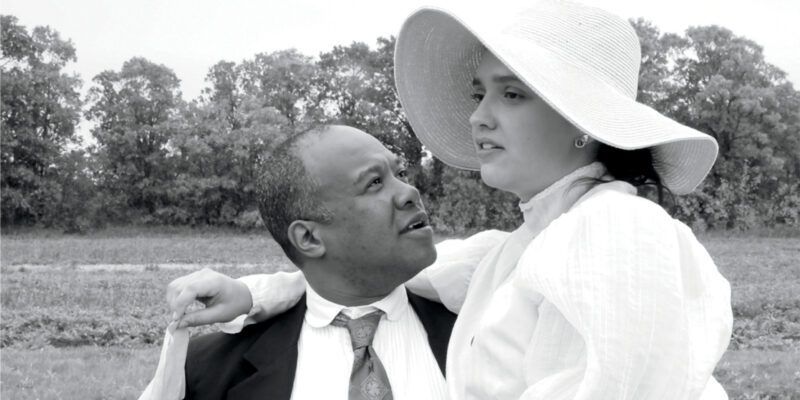
Meet the starts of our upcoming film: Ray Strachan and Julie Lumsden. Q: Let’s start with the biggie: in your view, are the Macbeths a happily married couple? Why or why not?! A-Ray: Yes, I think before their downfall they are very much in love. It’s not until their plan goes awry, where their love is strained and starts to fall apart. A-Julie: I think our beloved Mrs and Mr Mackers are perfectly suited for each other. Does that mean that they are happily married? Maybe not. But they are two halves of the same ambitious pie. Q: Often, it’s been said that Lady M “pushes” Macbeth into action…but let’s be honest, he is not without agency or self-control. Who really is to blame for Duncan’s murder, and what unfolds thereafter? A-Ray: Both. I think both are obsessed with power and glory. A-Julie: Hmmm. I think like a good divorce, the blame for Duncan’s murder is split 50/50 between these lovers. Lady M is acting in Macbeth’s best interest, knowing all they can gain if they get rid of this obstacle. Who knows if she would have done the deed had he not had the courage? It wouldn’t have happened without her, that I know for sure. Q: Do you think the Macbeths had children? The text seems to allude that Lady M has cared for a baby… A-Ray: I think they did have a child that didn’t survive. It’s something that’s still a sore spot for the two, and somewhat of an embarrassment. A-Julie: This is highly contested, argued and played out in different ways in performance. For me, our Lady M has experienced a lot of loss in her life. She knows the deep well of pain that is possible in a human lifetime. Has she lost a baby? Was she a wet nurse? Was she married before and lost her husband? Is she infertile? The answer to that may need to be my little secret. But I do know that she has experienced deep grief, making the decision to act upon her ambition even more vital. Q: Let’s say the witches never show up, and no prophesy about Macbeth becoming the King is ever revealed, what do you think happens to the couple? A-Ray: I still think they find themselves in trouble. I think them not having a child leaves them empty, and unaccomplished, leaving them hungry to fill that void. I don’t know if their goals would be as lofty without the prophecy, but there’s a deep seeded unhappiness that the Macbeths need to address. A-Julie: Oooh! If I could write this script, it would include Mackers and Lady M becoming very wealthy, possibly becoming the first ever millionaires of a multi-level marketing scheme? Something sinfully successful that preys on the easily manipulated. With Lady M in glorious gowns with lots of ladies in waiting. Something like that. Q: Funnily enough, while we were filming our own black-and-white cinematic version of Macbeth, one of the Coen brothers announced they too were wrapping production on their own black-and-white screen adaptation, starring Denzel Washington in the title role. What are your thoughts on the importance of IBPOC artists tackling and reinterpreting the big classics, and what are your dreams and hopes for Shakespeare in performance in the 21st century? A-Ray: I hope that more Shakespearean works are filtered through the lens of diverse experiences and perspectives. Not only will that help keep The Bard relevant, but it will make his works more accessible for many more people. A-Julie: What is so exciting about our production of Macbeth, I think, is that we can stand fully in our humanity in these roles. From day one that was encouraged by the whole team. These roles have been interpreted every way from Sunday, and to be able to take these words from these characters, means something different in our bodies. What does it mean when these words are said by a Metis woman? How does that affect the way we interpret those words? It adds a new dimension to these classics when we can meet them with our full selves, when we are not just playing the “classic” Lady M. My dream for Shakespeare in performance from this point on, is that no one ever thinks “I can’t play that role” or “I’m too….. for Juliet”, or “Helena wouldn’t be….”. Shakespeare’s plays have stood the test of time because these stories are HUMAN. These stories do themselves a disservice when they are not portrayed with plurality, on every level. On stage, back stage and in the audience.

SHAKESPEARE IN STONY MOUNTAIN brings the Bard into the classroom at Stony Mountain Institution, the oldest federal prison in Canada, where participants explore the themes in Shakespeare’s most famous plays through discussion and performance. It is a powerful program aimed at helping participants to build self-confidence and the capacity for self-discovery through exposure to arts education. All who complete the course receive a Grade 10 drama credit towards their high school diploma. In January of 2021, the Institution was hit by the largest COVID-19 outbreak in a federal prison in Canada. 2020 was our sixth year running the Shakespeare program at Stony. Sadly, our time there was cut short by the pandemic. Here’s an update from Claire Thérèse Friesen, our Shakespeare in Stony program director: “A wretched soul, bruised with adversity, We bid be quiet when we hear it cry; But were we burdened with like weight of pain, As much or more we should ourselves complain.” The Comedy of Errors –William Shakespeare March 17, 2020: We finish reading the last scenes of Macbeth, as the sun goes down over Stony Mountain Institution. One week later we go into lockdown across the world. One year later we are still unable to gather. One year later there are still no visitations for those incarcerated; not even from their mothers and lovers and babies and friends. No phone calls. No ability to see those faces, even virtually. Those who were isolated go deeper into isolation. Those walls built to keep in grow higher to keep out. One year later, I stare at a blank page unable to think about before; unable to imagine what comes next. A year of innovation and adapting, yet those walls are still concrete. I often wonder “how does this program affect one’s health?” Over the years I have observed the connection between the Shakespeare program and literacy outcomes; observing participants as they build critical thinking skills; as they approach the text with confidence; as they analyse the script using resources and problem-solving. We are able to understand ourselves in relation to characters that are 450 years old – which is quite magical. We are able to see ourselves as creative beings instead of the labels that have been prescribed to us by society. That group dynamic, and that support and belonging that we provide for one another– the community that we build over the course of a number of weeks–that, for me, is an indicator of health. This program means a great deal to me, and to Shakespeare in the Ruins. The success rate and the intrinsic value of this initiative are beyond measurable. by Claire Thérèse Friesen
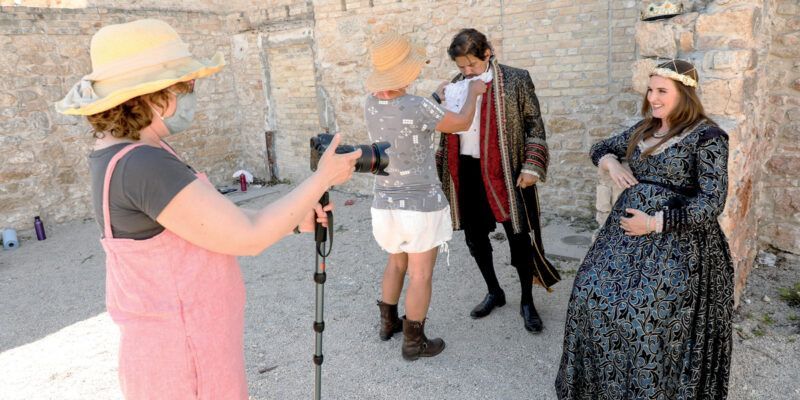
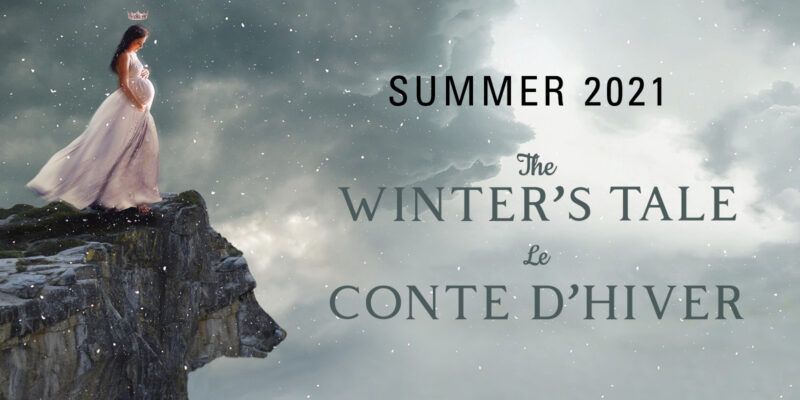
As I set my mind back two decades, I’m on a sailboat off the coast of Australia’s Great Barrier Reef about to drop over the side and scuba dive. There were about 30 divers on the boat from all over the world. For four days we bob up and down in the endless ocean with no land in sight. Our days were spent 30 metres below the surface of the sea. In the evening, we socialize. What does this have to do with a bilingual production of The Winter’s Tale? Well it is simple. I had been drawn into many conversations on the boat, but eventually you will always find your people and my goto person to hang with was Max. Max was from Germany. He was an actor, mostly television. But one day, I asked if he ever did any theatre? He told me he was a Shakespearean actor on the side. “On the side.” I loved that. Max mentioned that on returning to Germany he would be starting rehearsal on Macbeth and that the production was heading to a Shakespeare festival in Japan. The Scottish play in German, playing to a Japanese audience. It’s a big world out there! I remember thinking, here is something I would love to tackle one day. At that time, I hadn’t directed anything yet. I knew it would have to wait til I had honed my story-telling chops. And this brings me to this point. With every artistic project there are risks and certainly I am very aware that a bilingual Winter’s Tale is going to take me outside of my comfort zone. But one should do something you fear every day…so let’s pull up the anchor and set sail!
SHAPING A NEW DESTINY Theatre is a conversation. As artists we are moved by a relentless desire to keep the conversation going. We wish to connect; to reach; to examine; to reveal; to poke; to provoke; to feel… I have recently learned from poet David Whyte that the word ‘conversation’ comes from Latin: “converse/to turn about/inside out”. It’s a gorgeous concept; a conversation is turning things inside out. The whole point of what we do in the theatre is to inhabit someone else’s perspective; to learn about somebody else’s experience; to turn ourselves inside out, and in turn, we turn YOU inside out. What a stunningly hopeful thing theatre is, when one really thinks about it… Our trade is an incredibly challenging and economically precarious one, but so vital – particularly considering how the world has transformed itself in the last two decades. We have expanded into a “global village” and lost the immediacy of community, and we are now dealing with the consequences of that expansion as our conversation breaks down. We seem to be stuck; hoping and waiting, like characters in a Beckett drama. How do we heal from that? It is time to turn ourselves inside out again. It’s time to dare to share our desires and vulnerabilities without fear – it’s time we wrote a new story for us; a new story for humanity that values collective intimacy and community above all; a new destiny! MACBETH and WAITING FOR GODOT were written so long ago. And yet here we are, turning them inside out, yet again; trying to once again make sense of what they were saying when they were first written, and finding new meanings and connections for them now – and in that way, we are reshaping those plays (and ourselves) for the future. I’ll see you at the park for a great conversation!
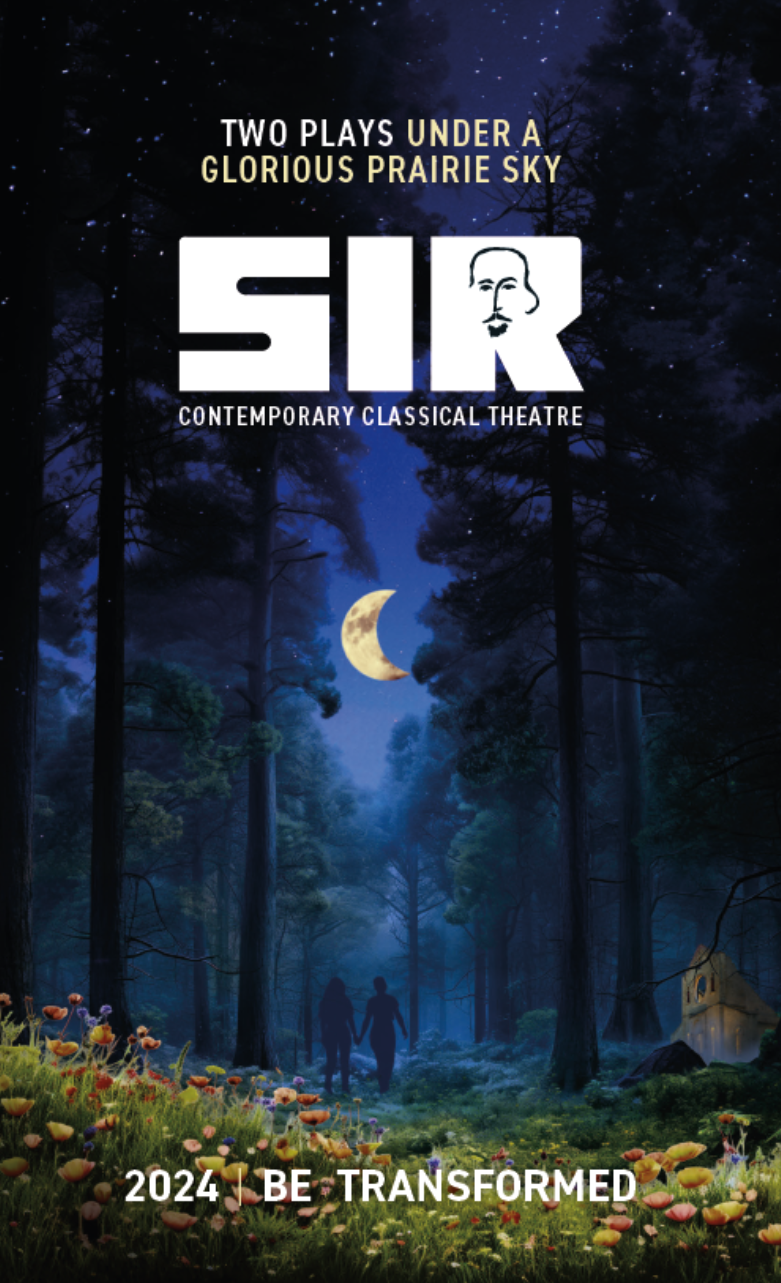
I hope you’re ready for a proper great time. At SIR we believe that Joy is vital to navigating a persistently volatile world, a “distracted globe” – as Bill once wrote. This season promises a restorative time in nature, as your ears are tickled by beautiful, transformative language; and your senses are reawakened to serenity and wonder! Our choices for the upcoming season embrace the theme of transformation. These plays celebrate our ability to adapt, to embrace magic and storytelling, and to ultimately change, as individuals and communities. My fellow (but much more famous) South American, the revolutionary Che Guevara once said: “let the world change you, and then you can change the world”. I love this quote because it implies a surrender – a leap of faith. In other words: magic. It is an invitation for us to be open and to stay curious about the possibilities and surprises of life. For the first time since 1995, A Midsummer Night’s Dream will return to the Ruins and deliver that much-needed jolt of magic you’ve been craving. Playing in repertory alongside Dream, we will once again celebrate a new Canadian play: Iago Speaks , by Saskatoon’s incredible Daniel Macdonald. This cheeky and highly intelligent sequel to Othello isn’t afraid to ask the big existential questions that haunt us – and it does so with a spectacular sense of humour and charm. Join us at the Ruins this summer to have your expectations both shattered and met! Be surprised, puzzled, delighted and ultimately… Be transformed.
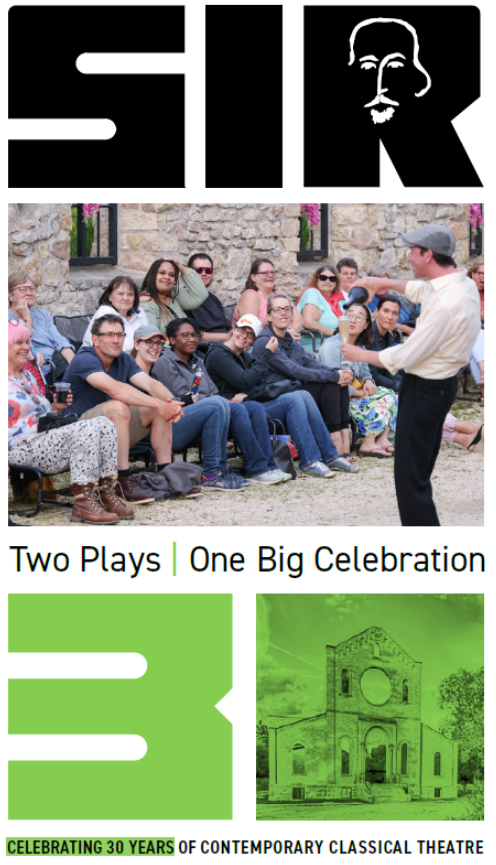
2023 Newsletter SIR’s 2023 season is about collaboration and celebration, with two distinct and delightful productions: Twelfth Night , arguably Shakespeare’s finest comedy, is filled with revelry and longing; while The Dark Lady , a world premiere of a new work by Jessica B. Hill is a dynamic duet that dismantles our conventional views on Shakespeare through the perspective of poetess Emilia Bassano – the possible ‘dark lady’ that appears in his sonnets. This ‘digital newsletter’ is your invitation to become intimately acquainted with this season through audio interviews, web chats, playlists & more.
2022 Newsletter

2019 Newsletter
2018 Newsletter

2017 Newsletter
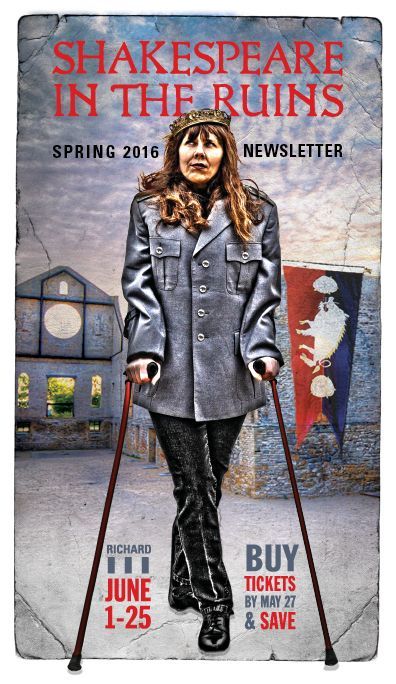
2016 Newsletter