
Shakespeare & The Courage To Not Know

An Invitation To Reimagine The Purpose For Teaching The Classics

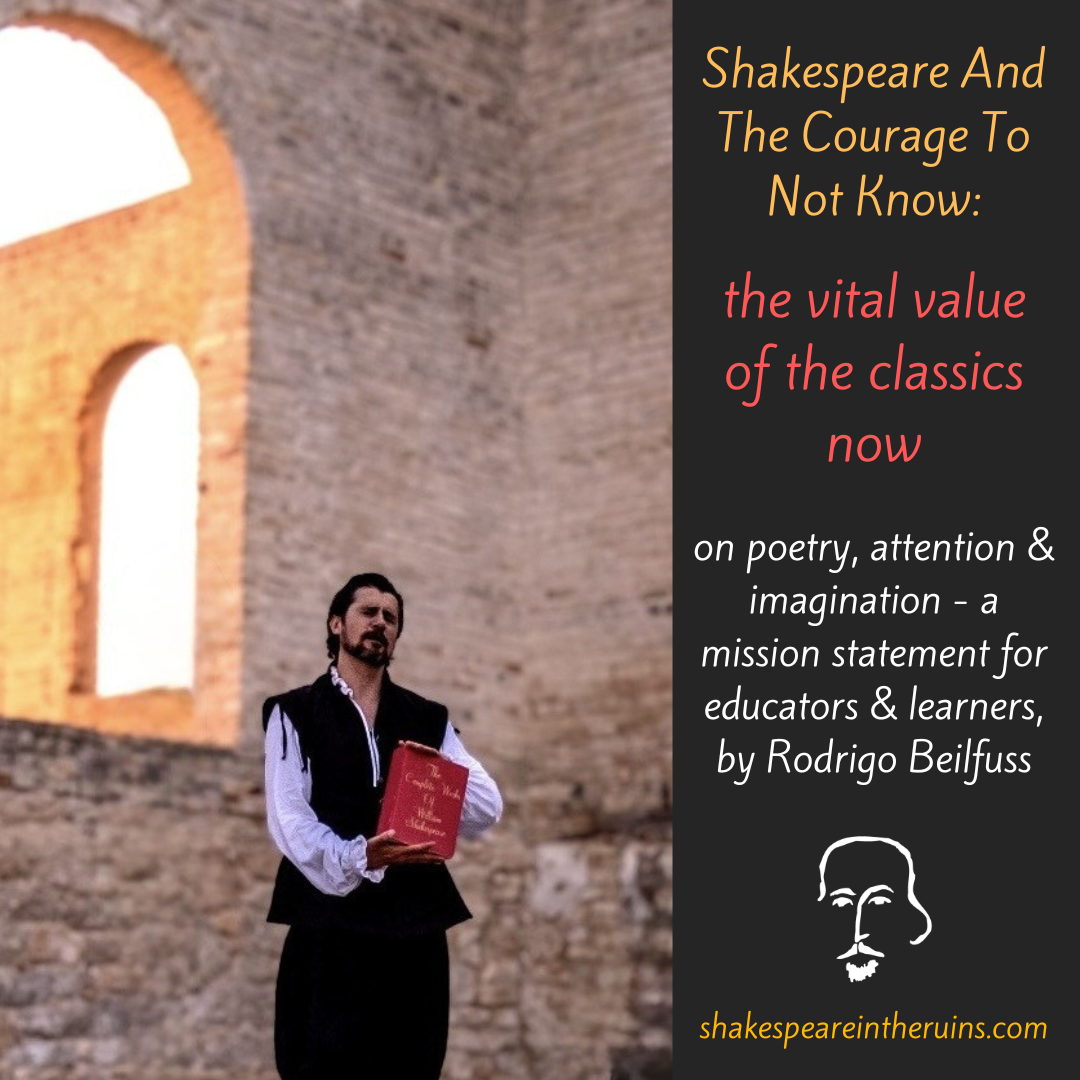
Photo by Fabio Hofnik - The Player King, a 2022 SIR production - performed by Rodrigo Beilfuss, Directed by Ron Pederson, Designed by Joseph Abetria


I recently delivered the talk/lecture below as part of the MATE (Manitoba Association of Teachers of English) PD Day Conference, on October 23rd, 2026 - A World of Change: Strategies for the ELA Classroom.

Many participants have asked me for a transcript of my notes and thoughts. So I've decided to compile it all into the blog post below. I hope you enjoy it, and that it may prove useful on your journey.
- Rodrigo B.


PART ONE: THE BOY WHO DIDN’T SPEAK ENGLISH


First of all, thank you for inviting me to spend some time with you today. I would also like to acknowledge the wonderful irony of doing this talk via Zoom, given that so much of what I'm about to say focuses on the need for embodied experiences, and the value of proper intimacy. Nevertheless, I will also touch on contradictions, so this is absolutely perfect!


I want to begin with a story.


When I was eighteen years old, I arrived in Winnipeg from Brazil as a high school exchange student.

I was a boy. I was alone in a new country. And I barely spoke English.


Now, I had studied English in Brazil, of course. But there is a rather significant difference between studying a language in a classroom and suddenly having to conduct your entire life in that language.


Everything was unfamiliar. Everything required translation. Every conversation was an exercise in concentration, in decoding, in trying desperately to keep up.


And then I found myself in Mr. McLeod’s English class at st james collegiate.


And we were studying Hamlet. Just a few weeks after I got off the plane.


Now, you can imagine.


Here I was, a Brazilian teenager struggling to understand what people were saying to me at the grocery store, and suddenly I was expected to understand William Shakespeare.


It was terrifying.


But something extraordinary happened in that classroom.


I realized that I wasn’t the only one who was confused.


Suddenly, everybody was confused by the English language.


All these Canadian students, who had been speaking English their entire lives, were staring at the same pages, scratching their heads, trying to understand what on earth this man was talking about.


And suddenly, something shifted.


For the first time since arriving in Canada, I didn’t feel particularly disadvantaged by my relationship with the English language.


We were all in the same boat.


We were all trying to crack this extraordinary code.


And I remember feeling this tremendous impulse to simply speak the words.


Even when I didn’t understand them. Especially when I didn’t understand them.


I wanted to put them in my mouth. To chew on them. To taste them. To hear what they sounded like coming out of me.


There was something delicious about the language.


Something muscular. Something mysterious.


And I discovered that I didn’t necessarily have to understand what I was saying in order to begin enjoying the experience of saying it.


That was a revelation.


Because what Mr. McLeod’s classroom offered me (because of what he allowed me to play with) - whether he knew it or not - was permission not to know.


Permission to be confused; without shame.


Permission to encounter something difficult and not immediately tame to understand it.


Permission to play.


And that permission changed my life.


It opened up the English language to me in a way that no vocabulary test, no grammar exercise, no conventional language lesson ever had.


It invited me into a relationship with language that was physical, imaginative, emotional, and profoundly personal.


Eventually, of course, it led me to the theatre.


And here I am, all these years later, making a living speaking words that other people have written. And the name 'Shakespeare' has been on my paycheque since 2014, between working at Stratford and now leading SIR.


If Bill was told 4 centuries ago that a Brazilian would be paying his bills on his money in Winnipeg, he would have gone What?!


Which, when you think about it, is a rather absurd way to make a living.


But it’s a beautiful one.


And I sometimes wonder what would have happened if, instead of being invited to explore Shakespeare, I had simply been told that the text was too difficult for me. That I had to LEARN the words. That I had to speak in a certain way. In a certain accent. Write a massive essay about it. Etc. That I wasn’t ready. That we should find something easier, something more accessible, something I could understand immediately.


I wonder what would have been lost.


Not simply in terms of my education. But in terms of my life.


And so I want to begin today with a proposition. A slight provocation.


Perhaps one of the greatest gifts we can give a student is not the confidence of knowing, but the courage of not knowing.


Because I think we’re living in a world that is becoming increasingly uncomfortable with not knowing; with uncertainties.


And I think Shakespeare has something rather urgent to offer us.


PART TWO: THE TYRANNY OF EFFICIENCY


We are obsessed with efficiency. We optimize everything.


We optimize our schedules. Our productivity. Our communication. Our entertainment. Our relationships. Our sleep. We optimize our sleep. There is an app for everything.


We have technology that anticipates what we want before we even know we want it.


We have algorithms that curate our cultural experiences for us.


We have devices that promise to eliminate inconvenience, friction, waiting, and uncertainty.


And increasingly, I fear, we are applying the same logic to education.


How can we make learning faster?


How can we make it easier?


How can we deliver information more efficiently?


How can we remove the obstacles that stand between the student and the desired outcome?


Now, of course, accessibility matters enormously. And I’m not suggesting that difficulty is inherently virtuous, or that we should make learning unnecessarily complicated.


But I do wonder whether, in our pursuit of efficiency, we risk eliminating something essential.


Because what if the friction is where the learning happens?


What if the difficulty isn’t an obstacle to the educational experience?


What if the difficulty is part of the experience itself?


I’ll give you a rather embarrassing personal example.


Earlier this week, I decided to write a letter to a friend. An actual letter. With a pen. On paper.


Remember those?


And I thought it would be lovely. I imagined myself sitting quietly here at my desk, composing my thoughts, enjoying the intimacy of handwriting. Well.


I couldn’t do it.


I genuinely couldn’t do it.


My mind was moving so much faster than my hand could keep up with.


I was rushing. I was scribbling. My handwriting was becoming increasingly illegible. It was a mess.


I couldn’t tolerate the pace of the exercise.


Eventually, I gave up and typed the letter, and then copied it by hand - with great struggle...


And I found that surprisingly heartbreaking.


Because I realized that something had changed in me.


I have become so accustomed to the speed of digital communication that the simple act of slowing my thoughts to the pace of my hand had become deeply uncomfortable.


And I began thinking about what that meant.


Not simply for handwriting, which is obviously not the central crisis of our civilization.


But for the experience of thinking itself.


What happens when we become so accustomed to speed that slowness feels intolerable?


What happens when we become so accustomed to immediate comprehension that confusion feels like failure?


What happens when every question seems to demand an immediate answer?


Our technologies don’t simply influence what we consume. They influence the habits through which we consume it.


And I worry that some of those habits are becoming incompatible with the sustained attention required for complex thought.


Now, I’m not a neuroscientist. I don’t want to pretend that I can diagnose an entire generation’s brain.


But I can speak to my own experience. And I suspect many of us recognize something similar.


We are losing patience with the slow unfolding of things.


And that brings me back to Shakespeare.


Because Shakespeare is gloriously inefficient.


He refuses to deliver everything immediately.


He asks us to stop.


To listen.


To return to a sentence.


To speak it again. And again. And again. And again.


To toss a sentence about like you're throwing laundry into a washing machine, and watch it spin and spin and spin, trying to catch the light of meaning; changing rhythms as it goes round and round...


To discover that a word we thought we understood might mean something else entirely.


To sit with an image that doesn’t immediately reveal itself.


He asks us to pay attention. To sit in confusion.


And in a culture that is increasingly organized around the elimination of friction, Shakespeare insists upon it.


I would argue that this is not a reason to remove him from our classrooms.


It may be one of the most compelling reasons to keep him there.


Because reading is hard work.


Thinking is hard work.


Engaging with complex language requires concentration, patience, effort, and sometimes discomfort.


And I think we have to be very careful about confusing discomfort with harm.


They are not the same thing.


Of course we must protect our students from genuine harm. Of course we must create compassionate, supportive learning environments.


But we must also create environments where students feel safe enough to struggle. And we can help, and hold them through that struggle.


Where they understand that confusion is not evidence of stupidity.


That frustration is not evidence of failure.


That the inability to understand something immediately does not mean they are incapable of understanding it eventually.


And perhaps most importantly, that understanding isn’t always the destination.


Sometimes the exploration itself is the point. To rest things in the process stage, instead of striving for a product...


For instance. I love rehearsing a play far more than actually doing it night after night. I love process. Investigation. Invitations. Conversations. Confessions.


Making a product is far less interesting...


PART THREE: SHAKESPEARE ENTERS THE BODY


Now, here’s where I think we sometimes get Shakespeare wrong.


We begin with the head.


We begin with comprehension.


What does this word mean?


What is happening in this scene?


What is the plot?


What does this character want?


What is the central theme?


And all of those questions are important.


But I wonder whether we’re sometimes beginning at the wrong end of the experience.


Because Shakespeare wasn’t writing novels.


He wasn’t writing academic texts.


He was writing plays.


And plays are meant to be spoken.


He was writing for actors.


For bodies.


For voices.


For breath.


For audiences gathered together in a physical space.


And I think we sometimes forget how fundamentally physical the experience of language can be.


When I encountered Shakespeare at eighteen, I wasn’t initially interested in understanding the philosophical complexities of Hamlet. I couldn't. And I literally could not understand what the words meant. I simply chose to get past all the shame and play with sound.


I was interested in the sounds. In the sonic experience.


O that this too too solid flesh would melt, thaw and resolve itself into a dew…


I wanted to say the words.


I wanted to experience them in my mouth.


And I think there’s a tremendous opportunity here for educators.


What if we begin with pleasure rather than comprehension?


What if we begin with sound?


With rhythm?


With the music of the language?


What if we invite students to encounter Shakespeare as something to be played with, rather than something to be solved?


Think about iambic pentameter.


Now, the phrase itself sounds rather intimidating, doesn’t it?


Iambic pentameter.


It sounds like something you might need a medical specialist to examine.


But essentially, we’re talking about rhythm.


A pattern of beats.


A pulse.


Five iambic feet, each generally moving from an unstressed syllable to a stressed one.


da-DUM, da-DUM, da-DUM, da-DUM, da-DUM.


And when I teach this to young actors, I sometimes describe it as the hip-hop of Shakespeare’s time.


Not because Shakespeare was literally writing hip-hop, obviously. But because there is something immediately recognizable about the pleasure of language organized through rhythm.


Rhythm is meaning. And meaning is rhythm. 5 stresses in a 10 syllable line.


Shall I compare the to a summer’s day

Thou art more lovely and more temperate


A musical structure. Through expectation and disruption.


And suddenly the text doesn’t have to be approached as an intimidating intellectual monument.


It can be approached as music.


As play.


As something that lives in the body.


A little experiment


Let’s try something together.


I want everyone to say a line of Shakespeare aloud.


You can do this with me, or privately wherever you are.


It’s from Hamlet:


“To be, or not to be, that is the question.”


Now, forget what it means for a moment.


Forget that this is perhaps the most famous line in the history of English drama.


Forget everything you know about Hamlet.


Just say it.


Now let’s find the pulse underneath it.


To BE, or NOT to BE, that IS the QUES-tion.


You can hear the movement of the verse, even as Shakespeare plays with the pattern.


Notice how there’s something odd about this line. Can you see?


There’s an extra syllable. It ends in an unusually unstressed beat…


Why?


There is no "right" answer; but simply asking your students about why they think that is the very point of the investigation; ask them why they think Shakespeare breaks the form of his rhythm deliberately in the most famous of all lines...


Maybe, through form, Shakespeare is giving us a glimpse into the interior of the character.


Maybe by breaking the verse, he gives us...


...the heartbreak of Hamlet.


He is off the beat.


Form informs content.


Sound informs emotional quality.


Rhythm is meaning. Meaning is rhythm.


Try speaking it while gently tapping the beat on your chest.


Or walking, if you have the space.


Feel where the language wants to move.


Now say it again, but this time as though you’re genuinely asking a question.


Not making a grand philosophical statement.


Now try it as though you’re angry. Or exhausted.


Or amused by the absurdity of having to ask such a question in the first place.


Notice what happens.


The words haven’t changed.


But the experience has.


And perhaps something in the meaning has begun to change too.


Not because we looked up a definition.


But because we allowed the language to move through us.


And this, to me, is one of the great gifts of theatre.


The body can sometimes discover something before the intellect knows how to explain it.


And this is why I think embodiment matters so much in education today.


We live increasingly disembodied lives.


We experience much of our music through recordings and headphones.


We experience storytelling through screens.


We communicate with people who are physically absent.


Now, there’s nothing inherently wrong with any of that. I’m speaking to you through a screen right now!


But there is something distinctive about the experience of making language happen in the physical world.


For Shakespeare’s audiences, music and performance were living events.


Sounds came from people.


From instruments being played in the room.


From actors standing a few feet away.


The audience could feel the energy of a voice travelling through space.


And language wasn’t merely information.


It was an event.


Something that happened between bodies.


I think we can offer our students a little of that experience.


We can invite them to stand up.


To walk the rhythm.


To speak the words.


To discover how breath shapes thought.


How consonants create resistance.


How vowels open up the voice.


How a sentence can begin in one emotional place and arrive somewhere entirely different - through sound.


And suddenly Shakespeare isn’t an examination.


It’s an encounter.


And that encounter might lead to comprehension.


It might lead to curiosity.


It might lead to an entirely unexpected emotional discovery.


But first, we have to give students permission to play.


And, sure: I was a very eager student; not everyone wants to jump and speak.


Then meet them where they are in life: ask them to whisper the words. Whispering is wonderful.


Ask them to whisper them to themselves in private. Ask them to become intimate with the words in that way.


Seek that intimacy.


Language will suddenly feel like a prayer. And prayers come from need. And a need is marked by importance. And in that investigation, their words (Shakespeare's words) will gain importance. And that's acting: making words important!


And this leads me to something else I think is important.


Shakespeare the brand versus Shakespeare the artist


We need to distinguish Shakespeare the artist from Shakespeare the brand.


Because Shakespeare the brand can be an intimidating thing.


Shakespeare the brand is the great cultural monument.


The symbol of English literary superiority.


The name associated with centuries of educational institutions, cultural authority, and, yes, colonial and imperial history.


And for many students, especially students who don’t see themselves reflected in that tradition, Shakespeare can feel like something that belongs to somebody else.


Something they are expected to admire.


Something they’re expected to understand because somebody has told them it’s important.


But Shakespeare the artist?


That’s another matter.


Shakespeare the artist was a working theatre practitioner.


A playwright.


An actor. A dad of three kids. A commuter. A man from the country making a living in the big city.


A man writing for a commercial theatre.


Writing for audiences.


Writing for people who wanted to be entertained, provoked, moved, frightened, seduced, and delighted.


He was writing for the stage, not for the high school examination.


I sometimes imagine what Shakespeare would make of the way we teach his plays today.


I suspect he’d find some of it rather bewildering.


Imagine telling him that, four hundred years later, millions of teenagers would be sitting at desks, silently studying his words and worrying about getting the correct answer on a test.


He’d find that completely insane.


Because these plays were meant to live.


And I think one of our responsibilities as educators and theatre artists is to rescue Shakespeare the artist from Shakespeare the institution.


When we decide to stop teaching him, what we are really doing is saying we don’t want to engage with the institution of Shakespeare. But we can, and we should, engage with the artist.


To return the words to the bodies for which they were written.


To the whisper.


To restore their playfulness.


Their sensuality.


Their danger.


Their extraordinary humanity.


PART FOUR: THE THEATRE OF IMAGINATION


And there’s another remarkable thing about Shakespeare’s theatre.


It’s a theatre that demands the imagination of the audience.


We sometimes call this heard scenery.


The scenery is created through language.


Think about the opening chorus of Henry V.


Shakespeare is asking his audience to imagine an enormous historical world.


Armies.


Kingdoms.


Battlefields.


Horses.


All within the confines of a relatively modest theatrical space.


And the Chorus says:


“Think, when we talk of horses, that you see them.” And he asks the audience: "can this cockpit hold the vasty fields of France…?"


I love that line.


Think, when we talk of horses, that you see them.


It’s practically an instruction manual for the entire theatrical experience.


We don’t have the horses.


We’re not going to give you the horses.


We’re going to talk about the horses.


And you are going to see them.


In your mind.


The audience must complete the theatrical event.


The actors offer language.


The audience supplies the world.


And this requires something extraordinary.


It requires the active participation of the imagination.


That's the theatre Shakespeare writes. Nobody does that anymore. They’re all writing for Netflix, and they are writing around words, not through them.


Think about how much of our contemporary entertainment is built around giving us increasingly sophisticated visual representations of everything.


We can create entire universes on screens. In our phones!


We can render creatures, landscapes, armies, explosions, and impossible physical events with astonishing realism.


And that’s wonderful.


I love cinema. It is my favourite of all artforms!


But there’s a fundamental difference between being shown a horse and being invited to imagine one.


When an actor says, “Think, when we talk of horses, that you see them,” something has to happen inside the audience.


You have to create the image.


You have to collaborate.


You have to become, in some small way, an artist yourself.


And I think this is tremendously important.


Because imagination isn’t simply a decorative quality.


It isn’t something we use only when we’re making art.


Imagination is central to the way we understand the world.


It’s how we imagine possibilities beyond our immediate circumstances.


It’s how we begin to understand experiences we haven’t personally lived.


It’s how we consider alternative futures.


It’s how we entertain the possibility that the world might be different from the way it currently is.


And surely that is something we want to cultivate in young people.


Not simply the ability to receive information. But the capacity to create meaning.


To imagine. To participate. To see what isn’t immediately visible.


And this is where Shakespeare’s complexity becomes such a gift.


Because the language doesn’t do all the work for us.


It asks us to do some of the work ourselves, within us.


PART FIVE: THE CONTRADICTORY HUMAN BEING


Now I want to talk about something that I think is perhaps Shakespeare’s greatest contribution to our understanding of ourselves.


His fascination with the contradictory human being.


Because human beings are profoundly contradictory creatures.


We love people and hurt them.


We believe in things and act against those beliefs.


We are capable of tremendous kindness and tremendous cruelty.


We are courageous one moment and cowardly the next.


We can be extraordinarily intelligent and spectacularly dumb.


Often within the same afternoon.


And Shakespeare understood this. In fact, he seemed endlessly fascinated by it.


Let’s return to Hamlet.


At one point, Hamlet tells Ophelia:


“You should not have believed me. I loved you not.”


A devastating thing to say. But then, later in the play, at Ophelia’s grave, he declares:


“I loved Ophelia. Forty thousand brothers could not, with all their quantity of love, make up my sum.”


Well.


Which one is it, Hamlet?


Did you love her or didn’t you?


Were you telling the truth before?


Are you telling the truth now?


Is this grief?


Is this guilt?


Is this genuine love?


Is this a man performing his emotions for the benefit of the people around him?


Perhaps it’s all of those things.


Perhaps some of them.


Perhaps the contradiction itself is the truth.


And that’s what I find so extraordinary and delicious.


Shakespeare doesn’t resolve Hamlet into a neat psychological proposition.


He allows him to remain complicated.


Unpleasant.


Tender.


Cruel.


Brilliant.


Ridiculous.


And human.


I think of the famous idea associated with F. Scott Fitzgerald: that a first-rate intelligence is capable of holding two opposed ideas in mind while still retaining the ability to function.


Now, whether or not we accept that as a complete definition of intelligence, there’s something deeply valuable in the proposition.


The ability to hold contradictions.


To resist the temptation to simplify.


To recognize that two seemingly incompatible things may both contain some truth.


And I worry that we’re losing some of our appetite for this.


So much of our public discourse encourages us to define ourselves through certainty.


Through positions. Through identities.


Through belonging to one side or another.


We are encouraged to know what we believe, to announce it, to post about it, to defend it, and to identify those who disagree with us.


And certainly, convictions matter.


But what happens when conviction becomes incompatible with curiosity?


What happens when the desire to be right overwhelms the desire to understand?


Shakespeare offers us something different.


He gives us unpleasant heroes.


He gives us charming villains.


He gives us people who are capable of love and cruelty in the same breath. Throughout his 37 plays, people behave in bizarre ways.


And he asks us to spend time with them.


To listen.


To understand something of their humanity, even when we reject their actions.


Think about Richard III.


He’s monstrous.


And he’s funny!


He’s charismatic.


He’s theatrical.


He invites us into his confidence.


And before we know it, we’re enjoying the company of somebody who is doing truly terrible things.


What does that say about us?


Why are we so susceptible to charm?


Why do we sometimes find ourselves attracted to people whose behaviour we know to be appalling?


Those are uncomfortable questions.


But they’re important questions.


And they lead us to a much older theatrical tradition.


The Greeks and the civic imagination.


Shakespeare inherited a theatrical tradition that reaches back, through many influences, to ancient Greek drama.


And I find the relationship between theatre and civic life in ancient Athens fascinating.


Because theatre wasn’t simply a private entertainment. It was a public event. A communal encounter.


A place where a society could gather and confront some of its deepest anxieties and contradictions.


Ancient Athenian democracy was deeply limited by our standards: women, enslaved people, and many others were excluded from political citizenship.


But the relationship between civic life and theatrical experience was nevertheless extraordinary.


Think about the law (and so much of it we inherit from the Greeks and Romans).


The law has to make decisions.


It has to establish boundaries.


It has to determine responsibility.


It has to arrive at judgments. And rightly so.


But the theatre can take us into the human complexity that exists around those judgments.


The law may have to decide whether someone is guilty.


The theatre can ask us how that person came to do what they did.


What they believed. What they feared. What they loved.


What contradictions lived within them.


Think about Medea.


A mother who loves her children and nevertheless murders them.


How do we hold that?


How do we understand a human being capable of such an act?


Or Oedipus Rex.


A man of intelligence, authority, and determination.


A man who believes he can solve the great mysteries before him.


And whose pursuit of truth leads to the destruction of everything he thought he knew about himself.


These plays don’t offer us comfortable moral experiences.


They disturb us.


They force us to confront the limits of our understanding.


They remind us that human beings are not always consistent, rational, or even comprehensible to themselves.


And I think this is essential for the shaping of the young human mind.


Because if we cannot tolerate complexity in fictional human beings, how will we tolerate it in real ones?


If we cannot sit with contradiction in a classroom, how will we sit with it in our communities?


In our politics?


In our families?


In ourselves?


PART SIX: EDUCATION & THE DEMOCRATIC IMAGINATION


And this brings me to the larger argument I want to make today.


Because I don’t think the stakes are simply literary.


I don’t think this conversation is merely about whether Shakespeare deserves a place in the English curriculum.


I think the stakes are much greater than that.


We are engaged in one of the most ambitious social experiments in human history: the attempt to provide meaningful education to an entire population.


The aspiration of widespread public education, as we understand it today, is relatively recent.


Its development over the last few centuries has been one of the great achievements of modern societies.


But we are still learning how people learn. We are still discovering how minds develop. How curiosity is cultivated.


How intellectual confidence is formed.


How students come to understand themselves and the world around them.


And now, while we’re still grappling with those questions, we are living through a technological transformation of extraordinary speed.


We are asking schools to respond to changes in attention, communication, information, and culture that are unfolding much faster than many institutions can possibly adapt.


Sort of like my tragically futile exercise in trying to write a letter by hand...


And, indeed, in the middle of all this, we are tempted to simplify.


To streamline.


To remove difficult texts.


To replace complexity with accessibility.


And again, I want to be clear: I believe passionately in accessibility.


I believe that education should open doors, not close them.


But accessibility and simplicity are not the same thing.


Making something accessible should not necessarily mean making it easy.


It should mean creating the conditions in which someone can encounter something difficult and discover that they are capable of engaging with it.


That is what Mr. McLeod did for me.


He didn’t remove Shakespeare.


He gave me a way in.


And I think that distinction is absolutely essential.


Because what happens if we systematically remove the experiences that demand sustained attention?


What happens if we remove the texts that refuse to give us immediate answers?


What happens if we stop asking students to wrestle with difficult language, complicated ideas, and contradictory human beings?


What kinds of habits of mind are we cultivating?


And what kinds of habits are we losing?


Now, I don’t want to make the absurd claim that reading Shakespeare automatically makes someone a better citizen.


History would certainly disprove that.


Plenty of people have read Shakespeare and gone on to behave appallingly.


And Shakespeare is not the only writer capable of cultivating these abilities.


There are extraordinary, complex texts from every culture, every language, every literary tradition.


But Shakespeare is one of the great resources available to us.


And I think we should be very cautious about discarding him simply because he requires effort. Or because of that big brand.


Because democracy requires effort too.


Democracy requires patience.


It requires listening.


It requires the ability to consider perspectives other than our own.


It requires the ability to distinguish between what we know and what we merely believe.


It requires the willingness to reconsider our assumptions.


And perhaps most importantly, it requires us to live with people whose understanding of the world differs from ours.


Democracy is not an efficient system - very much like Shakespeare lacks efficiency.


It’s messy.


It’s frustrating.


It’s contradictory.


It’s often painfully slow.


And it asks us to do something very difficult: to remain in conversation with each other.


Even when we disagree.


Especially when we disagree.


And I worry that if we stop cultivating the intellectual and imaginative habits that make such conversations possible, our democratic institutions become increasingly fragile.


Because a democracy cannot function on information alone.


It needs interpretation.


It needs judgment.


It needs imagination.


It needs citizens who can resist the seduction of easy answers.


Citizens who can recognize manipulation.


Citizens who can sit with uncertainty without immediately surrendering to fear or anger.


And these are precisely the kinds of capacities that engaging seriously with complex literature can help us practise.


Shakespeare is practice.


Not because Shakespeare provides the answers.


But because Shakespeare gives us a place to practise living with the questions.


And I think that’s a profound distinction.


We’re not teaching students what to think.


We’re helping them discover how to think.


How to explore.


How to listen.


How to question.


How to remain curious when the answer isn’t immediately available.


How to resist the temptation to reduce the world to something simpler than it really is.


And in that sense, I think teaching Shakespeare can become a genuinely civic act.


An act of faith in the intellectual and imaginative capacities of young people.


PART SEVEN: RETURN TO THE CLASSROOM


And so I want to return, for a moment, to that classroom in Winnipeg in 2001.


To that eighteen-year-old Brazilian boy.


Who barely spoke English.


Who was frightened of the language.


Who was trying to find his place in a country that was still profoundly unfamiliar to him.


And who suddenly found himself in the company of Hamlet: a young man who didn’t understand the world around him. Who was confused.


Who was angry.


Who was frightened.


Who was trying to make sense of his existence.


And who, perhaps most importantly, didn’t have the answers.


To be. Or not to be.


I didn’t understand much of what Hamlet was saying.


I still don’t.


But somehow, I recognized something in the experience of trying to understand him.


I recognized the confusion.


The uncertainty.


The searching.


And through the extraordinary music of those words, I found a way into the English language. And a way into a new culture I'd later call home.


And eventually, a way into the theatre.


And eventually, a way into a life.


And I think about the extraordinary responsibility you have as educators.


Because you never quite know what you’re unlocking in a student.


You never know which sentence will stay with them.


Which poem will disturb them, or tickle their brain.


Which character will make them feel less alone.


Which moment of confusion might become the beginning of a lifelong curiosity.


And you certainly never know which eighteen-year-old immigrant sitting in your classroom might one day find himself talking to a room full of teachers about the extraordinary value of the very thing that once terrified him.


So I suppose my invitation to you today is this: don’t be afraid of the difficulty.


Don’t be afraid of the mystery.


Don’t be afraid of the moments when your students don’t understand.


And don’t feel that you must always provide an answer. Shakespeare doesn't provide answers, so why should you?!


Give them permission to explore.


Give them permission to play.


Give them permission to put the words in their mouths and discover what happens.


To find the beat.


Help them find pleasure in the effort.


Help them. Find pleasure. In the effort.


Help them discover that their minds are capable of more than they imagined.


Because we don’t teach Shakespeare simply because the world needs more Shakespeare scholars.


We teach Shakespeare because the world needs people who can pay attention.


People who can imagine.


People who can listen.


People who can hold contradictions.


People who can remain curious in the face of uncertainty.


People who can recognize the complicated humanity of others.


And if we lose our capacity to cultivate those things, I fear we stand to lose something far greater than a place in the curriculum: we risk losing some of the very capacities that allow us to live together.


So perhaps, in the end, the most radical thing we can offer a young person today is not another answer.


Not another shortcut.


Not another way to make everything faster, easier, or more efficient.


Perhaps it’s the invitation to stop.


To listen.


To encounter something difficult.


And to discover that they don’t have to understand everything in order to begin.


Because sometimes, the beginning of understanding is simply the courage to say:


I don’t know.


And then to stay.


To listen.


To wonder.


To play. To play. To play. To play. To Play.


da-DUM, da-DUM, da-DUM, da-DUM, da-DUM...


Related Articles

By Rodrigo Beilfuss • October 26, 2026
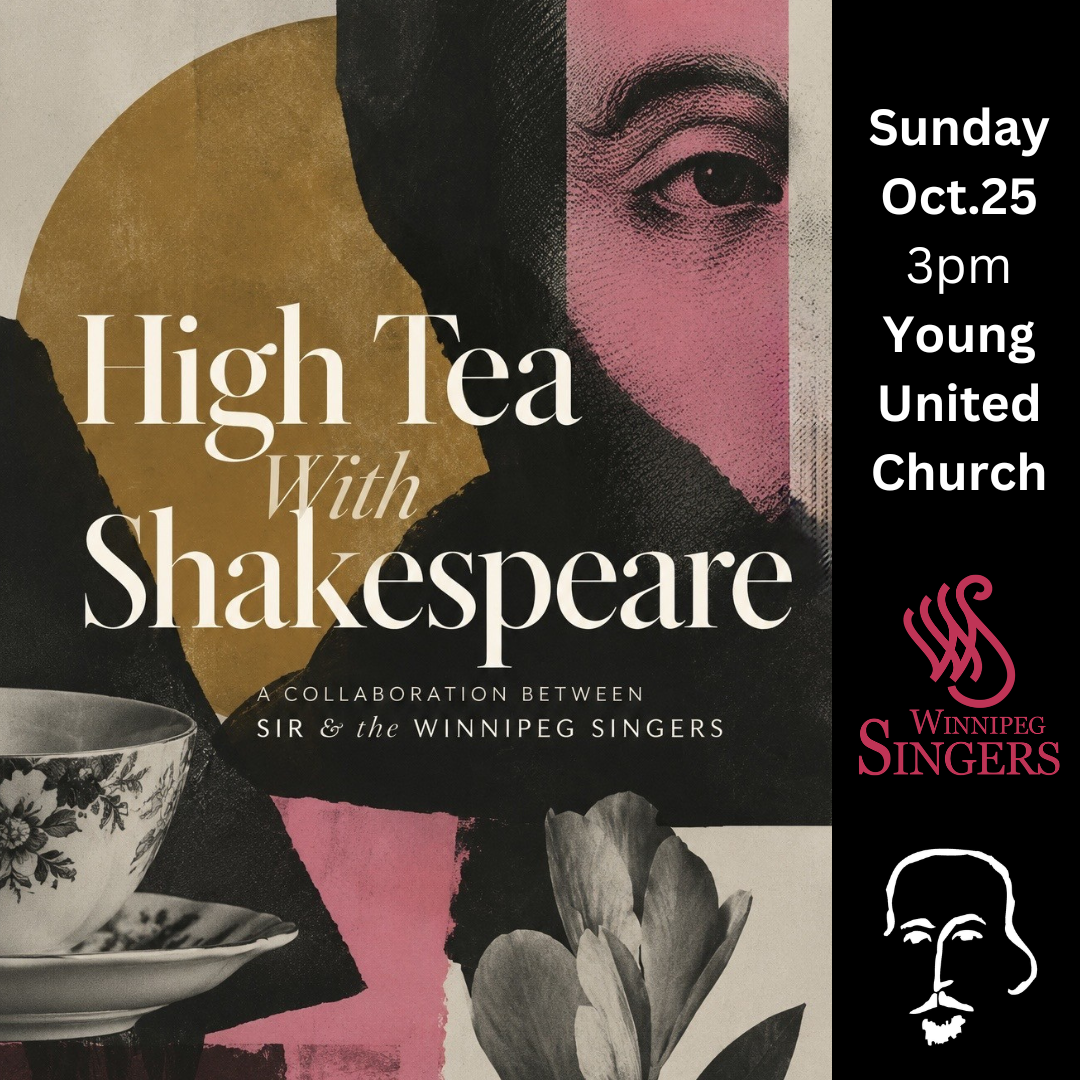
Music & Shakespeare & Tea
By Rodrigo Beilfuss • October 26, 2026
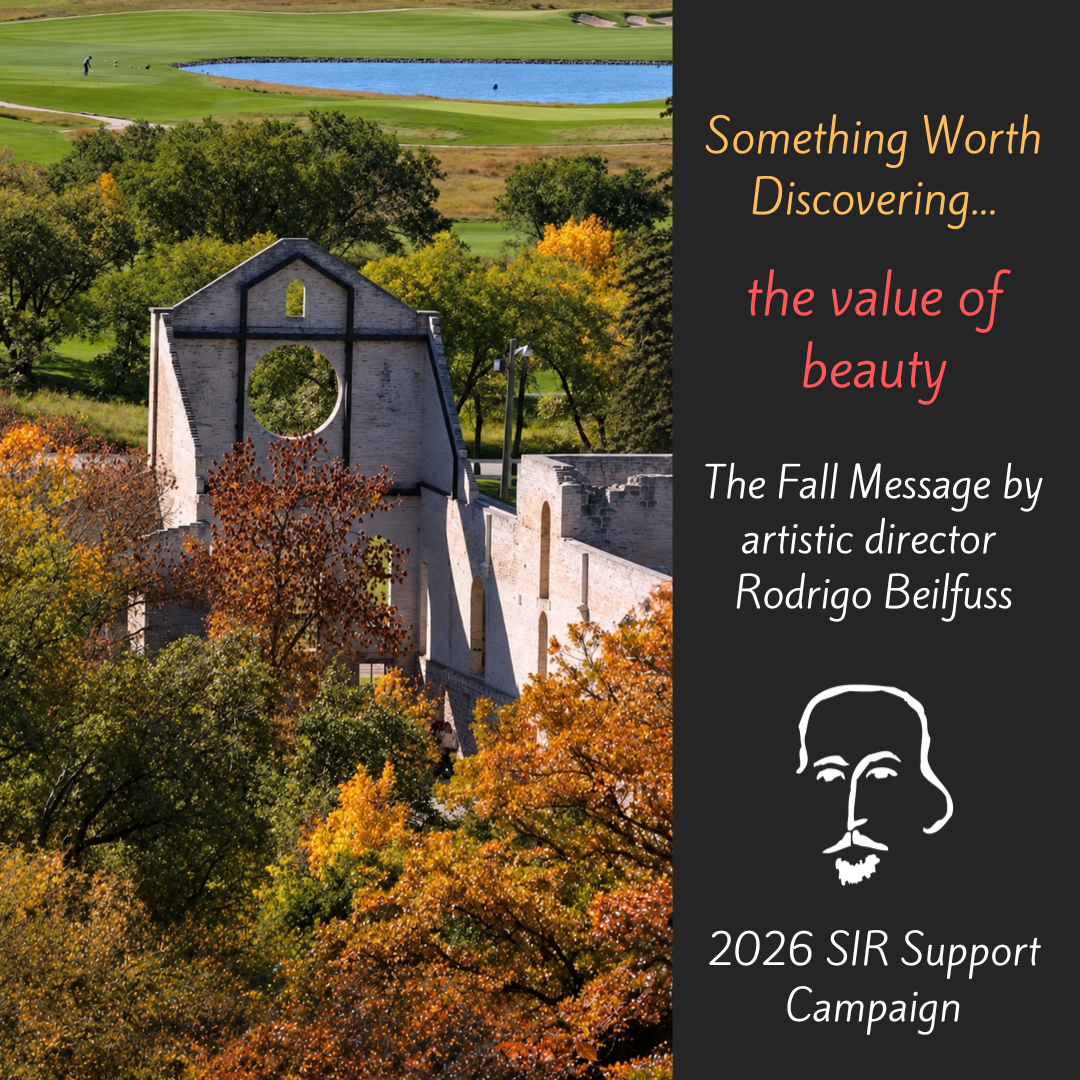
Launching the 2026 SIR Fall Fundraising Campaign
By Rodrigo Beilfuss • January 28, 2026
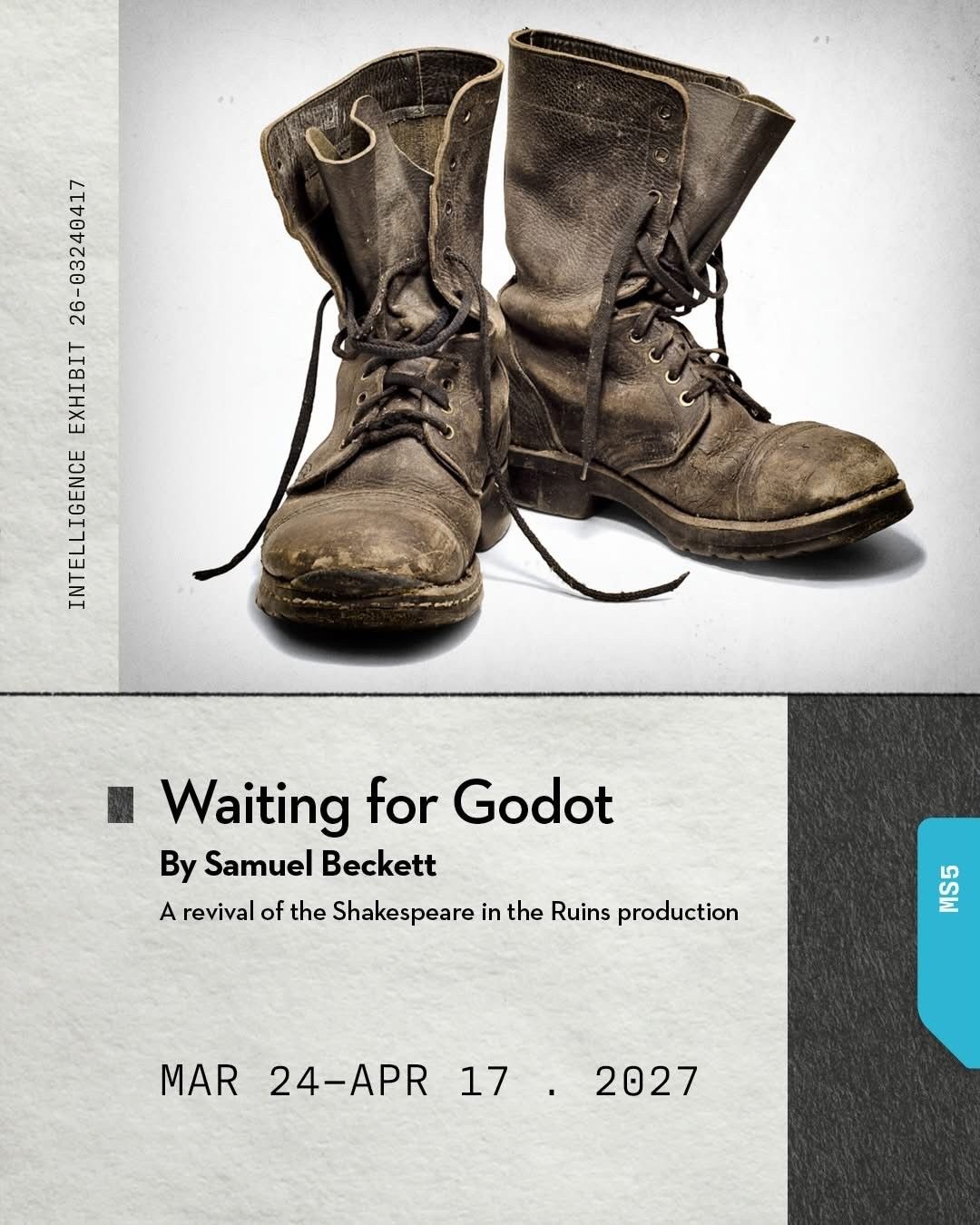
Dear friend, we have BIG news for SIR we’d like to share with you: Our 2025 production of Samuel Beckett’s WAITING FOR GODOT will be revived as part of the 2026/2027 Royal Manitoba Theatre Centre MainStage season! We are SO back! This is an exciting collaboration, and we couldn’t be more thrilled. As Estragon would say, “ What do we do now? Now that we are happy?!! ” The full stellar cast will be back, and we will re-imagine this stunning - and timely - text back to life, transporting the action from the outdoors and into the expansive indoor stage of the Royal MTC - what a great honour! I couldn’t be more grateful. Godot is my favourite (non-Shakespeare) play, and after the chaotic weather we faced at the Ruins last Summer, it is incredible to be given more life to explore this truly profound and delightfully silly play. ALSO, speaking of being grateful, I’d like to express how deeply moved I was by your generosity during our recent donation campaign - ‘Protect What You Love’. Your support is vital and brilliantly inspirational. THANK YOU ! 2025 was a challenging year, but also full of creation, daring, and love. We will be holding auditions this coming week, and in March we will announce our 2026 Ruins playbill - I cannot wait to share our plans with you! Here’s to the Future - our shared Future; we are your Shakespearean company. Lots of Love, Rodrigo , artistic director

December 29, 2025
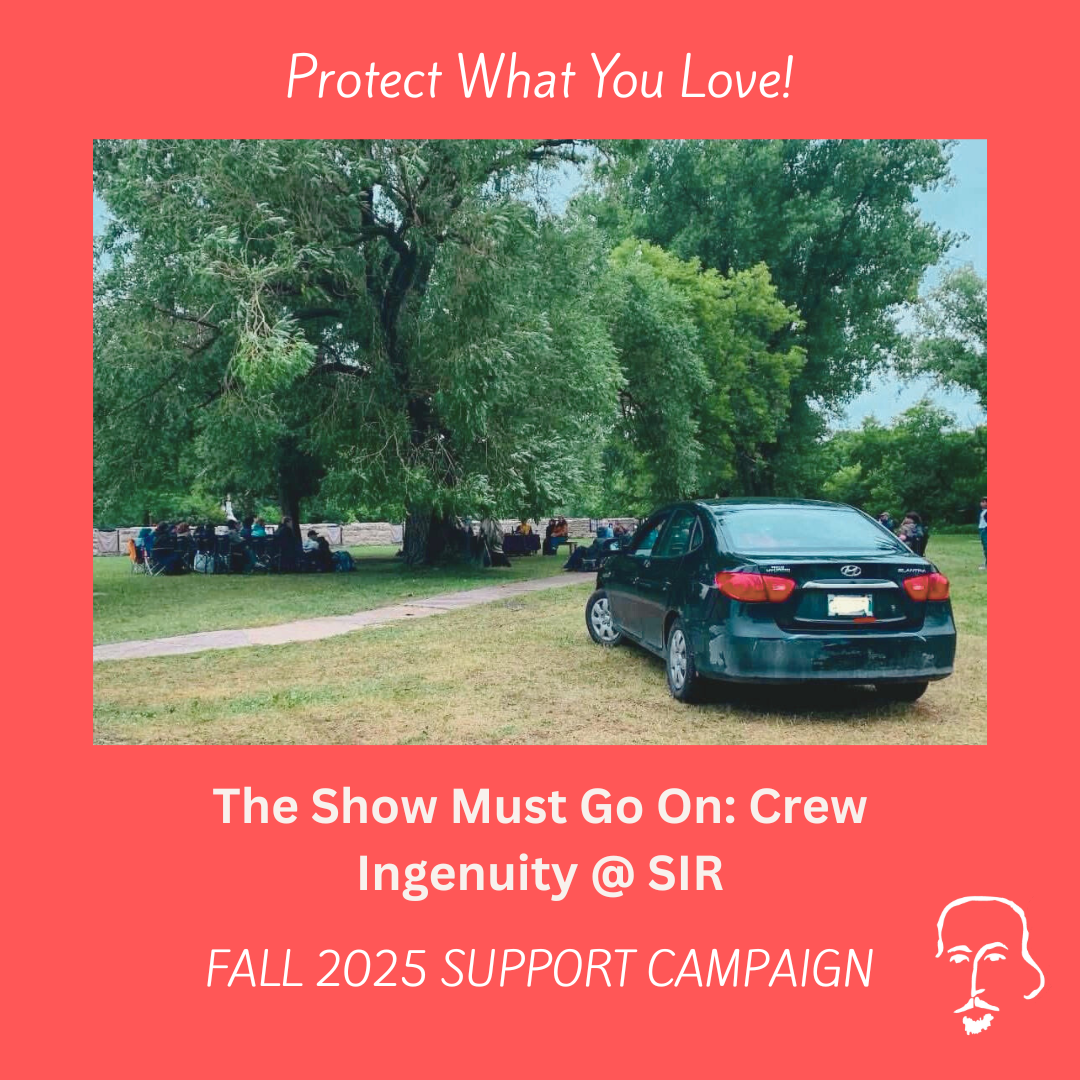
As we continue to celebrate what makes SIR and the people of SIR so special in our year-end campaign, we wanted to share with you a lovely conversation with LIAM DUTIAUME , who performed in both Macbeth and Waiting for Godot this last season. This was Liam’s first professional contract, and he was remarkable in both shows, displaying tremendous wit, verve, and heart. In fact, the Winnipeg Free Press agrees with us wholeheartedly, featuring Liam’s performance as one of the stand-out moments of the year in critic Holly Harris’s piece: SHINING STAGE MOMENTS OF 2025 . We were so lucky to have him join SIR this year! Enjoy the conversation below:  What inspired you to join Shakespeare in the Ruins as an actor? I was drawn to SIR for a couple of reasons, but of course one of the biggest pulls for me (as I’m sure it is for a lot of people) was the location! Getting to perform outside in the summer, in front of and inside the Ruins feels like being a kid again. I get to run around a “castle” with a sword and play with a bunch of people?! Who wouldn’t want that? Another big reason is getting to do Shakespeare with other people who love Shakespeare, and with actors whom I admire for their craft. It was an excellent way for me to get my foot in the door of the professional scene in Winnipeg. What is the most rewarding part of performing in the unique setting of the ruins? Thinking of this question my mind goes two directions. Firstly, from a more technical aspect as an actor, it really helped my voice. Having to run around the Ruins, jump into a scene, and then make sure people on the other end of the ruins can hear me through distant thunder and rain is the best kind of practical experience an actor can have. You can immediately tell when someone is straining to hear you on the other end, and it made me work hard to find a way to project safely without ruining my voice. The other direction my brain went was, as I mentioned in the previous question, getting to play outside. We had a great summer (if you don’t count the smoke) so getting to do something I love outside in front of an audience is such a treat. There were so many moments where having the elements to play with added to the experience for myself and for the audience, and that is truly special. Performing in the Ruins can be unpredictable—can you share a time when you and the team had to think on your feet to keep the magic alive? Towards the end of the run we had gotten some serious rain. At one point it had rained so much during the day that parts of the Ruins were full of ankle-deep puddles, and we couldn’t perform or have the audience sit in that. We had done blocking for a stationary run, but because it was an evening show we needed lights and all of the plugs that were available were in the flooded Ruins. Thankfully, the Technical Director Cari had the bright idea to drive her car up, so the headlights would shine into the area we would be performing. So we had to do this stationary run with minimal prep time and practice, and with only the lights from a car to light us for the end of the performance as the sun set. It was one of the more exciting and fresh runs we did because everything felt new and uncertain, which is something I think every actor should get to experience. Could you share what it was like to perform in both Macbeth and Waiting for Godot? How did those experiences differ for you? Tiring and rewarding. Both of the shows were so different from each other in terms of content, pacing, ideas, and character; but both were very demanding, especially at the start. With Macbeth, the action starts right from jump; we’re running around, yelling at each other, running again and then we’re onto the next scene and a different character. We kept that pace until we’re at the third location and then we get intermission, and the second half felt more calm for me. Fewer changes, less running, more stakes for the characters though, because of course we’re reaching the climax and we’re overcoming the tyrant Macbeth. On the flip side of this with Godot, once I got on stage a third into act one, I stood still with minimal shuffling for probably 40 minutes staring at one rock on the wall with my mouth hanging agape. At the end of my mental dissociation, I then have this mind boggling rant that is 5 minutes long where I hobble after the other characters, and once that’s done I don’t talk again for the rest of the show, but I am still present. One show is extremely high active energy and the other is extremely low active energy. With Godot I still had to be present as there were a lot of bits where I was yanked or had to shuffle and drop a bag, but I have to give the impression that there is no thought running through my head. Both of these were extremes for me, but so much fun. It was a marathon for both shows, but so rewarding to have these completely different experiences simultaneously. What did it mean to you to win the “Unexpected Phone Call Award” in memory of Glen Thompson? It was such an honour, and in all honestly completely unexpected. I had heard of the award before and knew people who had received it, but I wasn’t clear on the criteria of the award, so I wasn’t thinking I was in the running for it. When I heard we were going backstage to help give the award as a cast I thought that that was a fun idea, because I’d get to see who won it and how they reacted. You would have had to have been there to see the silliest grin plastering my face when they said my name in the phone call, but I couldn’t have been more honoured. To win an award that’s made after such a great actor is a real treat, and really helped me realize just how much I love the theatre community and the people in it. I never met Glen, but I heard others talk about him, and he is the reason the theatre community is so special, so to get the recognition of an award named after Glen is amazing and makes my heart feel very full for theatre and the people that make it happen. Why do you think it’s important for the community to protect and support Shakespeare in the Ruins? It’s important because small companies like SIR are where the heart of theatre lives. We get to have an intimate and touching experience with the audience that they can’t always get in other larger companies around the city. It’s a smaller crew, a smaller cast, and you get to see a show that has made people laugh or cry for more than 400 years. You get to learn about history, and see these characters that are so brilliantly written, so brilliantly that you can see yourself in them. It may sound romantic and overwrought but there is something so transfixing about the characters that Shakespeare writes, because most people can see parts of themselves in these characters and maybe understand actions they take, good or bad. Of course there is also a certain visceral nature to being outside with the actors, experiencing the heat, the rain, the thunder, that is unlike so many theatre experiences elsewhere. When you combine the writing of Shakespeare, the nature you’re surrounded by in the ruins, and the performances of some wonderful actors, you get to have a really magical experience with a community of other people.
December 17, 2025
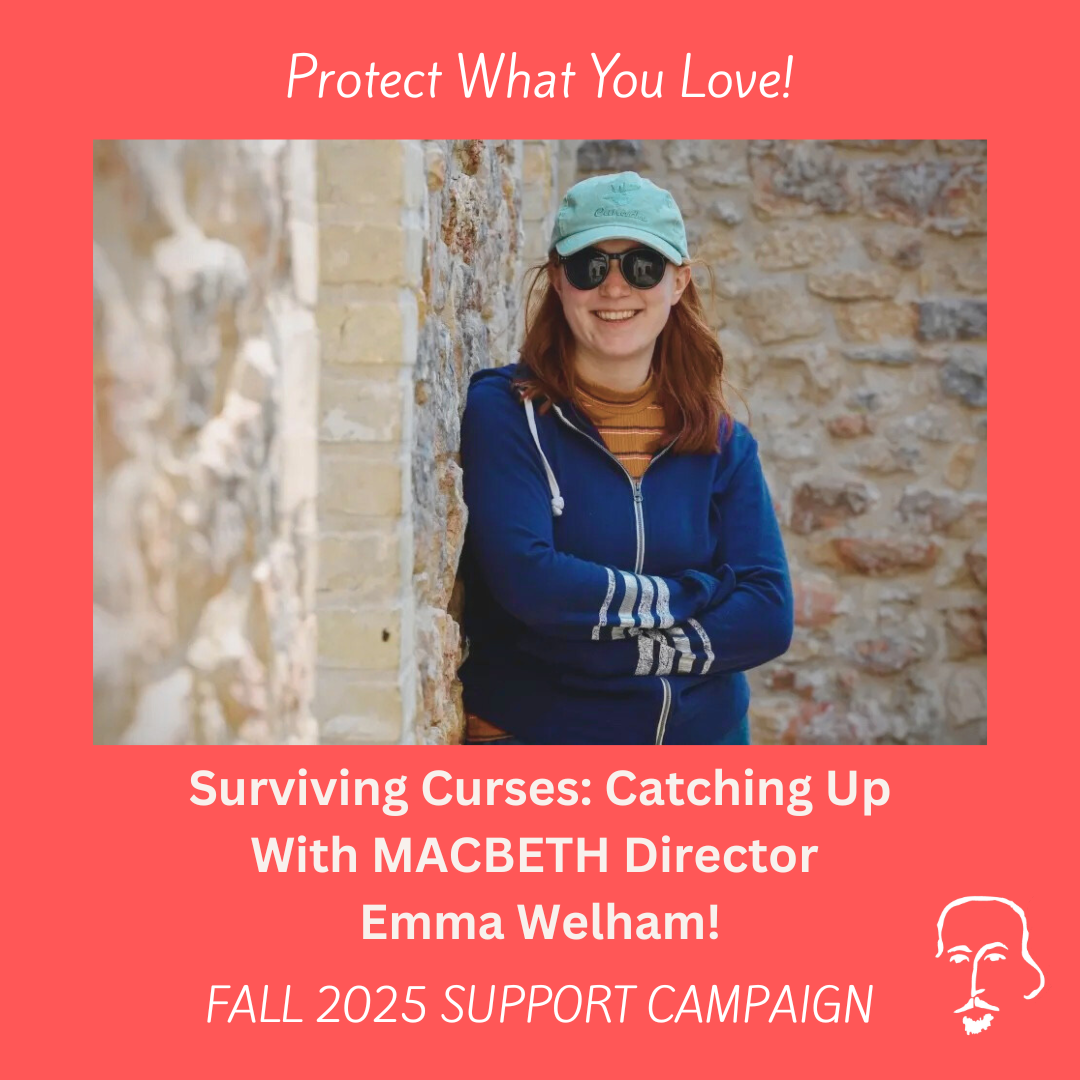
As we continue to digest what a landmark and slightly bonkers year 2025 was for SIR, we caught up with Macbeth director EMMA WELHAM, who bravely survived the famed cursed play! Emma reminds me a lot of myself when I was starting out: passionate about the work, a true lover of the form, and an enthusiastic collaborator who lives and breathes for the joy of making words jump off the page and come alive. Directing Macbeth was her first professional contract as a director, and she talks about the importance of companies like SIR – a place where emerging talents get to shine and join the professional industry. – RODRIGO, artistic director ***** How is life now, Emma, after having survived a legendary season at SIR? What have you been up to? Life is grand at the moment! After the SIR season finished, I returned to Montreal to begin my final year in the directing program at The National Theatre School of Canada. At the time of writing this, I have just finished the fall term where I had numerous wonderful experiences including directing My Name is Lucy Barton as my capstone project, and spending two transformative weeks studying Shakespeare with Sir Gregory Doran, former artistic director of The Royal Shakespeare Company. Now I’m back in Winnipeg for the holidays and enjoying catching up with the community here. What attracted you to Macbeth, and why did you want to direct such a complex text? I wrote about this in my director’s notes – Macbeth holds a very special place in my heart because it was the first SIR show I ever saw! The stripped down tour came to my high school when I was in grade 11 and I’ve never forgotten the experience. Outside of those fond memories, I think Macbeth is a very timely show. I was attracted to its tale of how unchecked ambition can throw a whole society into turmoil. As well, the conversation the play raises on toxic masculinity and how, for me, it questions what happens when we shut ourselves off from our feminine side was extremely compelling. I also became fascinated by the relationship between Macbeth and Lady Macbeth – they start off as equals, and once Macbeth starts to shut out Lady M, charting how both of them unravel through this new found isolation was a delight to explore with the actors. Finally, it was a very exciting challenge to examine and explore all the possibilities that were opened up to us because we were staging Macbeth at the Ruins! What do you think are the biggest challenges of directing at the Ruins? When you work at the Ruins, because you’re outdoors, every day comes with unknown variables and you have to be prepared for many possibilities. For example, you might plan to spend all day blocking, but if, suddenly, a massive storm comes, you’ve got to be able to change plans real quick. I don’t think I’ve ever checked my weather app more than when I’ve worked at the Ruins! I also echo what others have said, in that I think climate change is becoming an increasingly difficult challenge for not just the Ruins, but for all outdoor theatre. Even comparing my experience working on The Dark Lady in 2023 to Macbeth in 2025, in just two years there has been a massive increase of shows cancelled due to smoke and storms. It’s heartbreaking. And the best things? Things you can only do and experience at SIR? I love working at the Ruins. Out there in nature with the team, feeling slightly removed from regular life, I always feel like I’m away at summer camp. SIR allows you to create a theatrical experience unlike anything else in Winnipeg. The whole site is really your playground, and you can create these sweeping moments that engulf the audience and immerse them in the story. The promenade nature and the fact that you can see the audience for the majority of the show also enlivens that bond between performer and audience in a unique way – it becomes very intimate. Especially in Shakespeare, with all his soliloquies, the audience really becomes a collection of people that the characters can turn to and bare their souls. As well, while all theatre offers a sense of liveness, of anything-can-happenness, at the Ruins I find that liveness heightened because TRULY anything can happen – Will you see wildlife? Will the weather create a perfect atmosphere for the climax of the play? Will a rock calypso band be playing next door? (All real examples of things that I have experienced at the Ruins.) It is always an unforgettable night of theatre. What are some of your fondest memories of enduring Macbeth? During the process, did you ever wish you were directing another Shakespeare play? Perhaps a comedy? I have many! First, I have to say the resilience and unwavering dedication of everyone, from the cast and crew to the full-time SIR staff as we took on everything this season threw at us will always inspire me. In terms of specific memories, I will name the following two: 1. Before the show opened to the general public, we had several student matinees – seeing them engrossed in and reacting to the story was a true highlight. 2. Our witches were crafted around birds, with their costumes being inspired by owls. And when we got out to the Ruins, we had two majestic owls who joined us and could often be seen and heard. What’s more, these owls are barred owls (pronounced bard) – we had our very own Shakespeare owls! To answer your second question, no, I never wished I was directing a different Shakespeare play while doing Macbeth. However, as we worked, I did get flashes of how I might do other Shakespeare plays out at the Ruins – there are several I’d love to do out there! When one of the actors fell sick, about 3 weeks into the run of the show, you were called upon to perform in their place, book-in-hand. How was that?! Did it make you want to act again? Was it very different experiencing the play from inside? It was an exhilarating experience! The last time I had performed Shakespeare was in a 2019 production of Love’s Labour’s Lost directed by Rodrigo (which is how we met, and this wonderful journey began), so to be able to stretch those muscles again was a challenge I had a lot of fun meeting. And it must be said how incredibly supportive the entire team was – from gently nudging me where I needed to go, to helping me learn fight choreo before curtain, to cheering me on through-out – it was a beautiful thing to know I was amongst people who always had my back. What I loved experiencing from the inside was getting to see all the intricacies of everything going on backstage, some of which I was aware of, and some of which I was not, that allowed the show to run smoothly, and which I never saw while watching the show from out front. Also, I will say: it was 28 degrees and sunny the day I went on, and by the time we got to act 5, I had gained a deep appreciation for the stamina it takes to do a show in those weather conditions! I don’t know if I’ll act again (I’ll never say never!), but I certainly will remember my SIR acting debut for the rest of my life! Why do you think it’s important to protect the future of a company like SIR? SIR is a vital part of not just our theatre community, but our Winnipeg community. From an artistic stand-point SIR not only allows artists to sink their teeth into these beautiful heightened texts, but also gives many emerging artists, myself included, some of their first professional opportunities, allowing them to grow by working alongside and learning from the immense talent we have in Winnipeg. From a community stand-point, there is no theatrical experience in Winnipeg like what you experience when you go to a show at the Ruins. To me it has always felt like stepping into another world. And finally, what’s a favourite play by Shakespeare you’d love to direct one day? My favourite play by Shakespeare is Much Ado About Nothing. A long-time lover of the Kenneth Branagh film, that’s a show I very much hope is in my future as a director! ***** PS. IF YOU HAVEN’T YET, PLEASE CONSIDER A DONATION, AND PROTECT WHAT YOU LOVE: YOUR SHAKESPEAREAN COMPANY, SIR!
December 6, 2025
The incredible Cari Simpson, SIR’s Technical Director and all around crew magician, reflects on her time with the company, overcoming the challenges of the great outdoors, and the importance of protecting our unique theatrical practice: I first started working with SIR for purely practical reasons; on my end it filled a gap in my work schedule before Fringe started up, and on the company’s end the shows had started getting so large and complex that the actors couldn’t do everything themselves anymore like they used to. They had hired Steve Vande Vyvere on as crew a couple years before that to help with the workload, and when he took over as PM (production manager), the shows had grown even more on their return to the Ruins in 2012 that he brought me on for extra help. After my first show, which was Comedy of Errors (2014), I was hooked and immediately let Steve know I wanted to come back next year. It was a like a weird chaotic summer camp; I was dressed in a costume, pulling the old sound system around on a wagon, and dragging a crash mat from window to window for the actors to jump onto. In most theatre jobs, you spend your days inside, in my case often in a dark booth, so the change each spring to the fresh air and beautiful sunsets and wildlife running around is a nice way to balance my year out. And the actors and crew that think “yeah, I want to spend 2 months being outside, sometimes for 12 hour days, in all kinds of weather,” are my kind of people. There’s always a great camaraderie among everyone out there, and I’ve added a few truly close friends to my life from my time at the Ruins. That’s what keeps me coming back every year. I mentioned Comedy of Errors was my first mainstage show with the company, so it’s been 11 years now! The biggest change I’ve seen in my time with SIR is sadly the climate crisis and its effects on everything. Wildfire smoke is a new challenge from the last couple of years for sure, but the biggest hurdle is the storms. When I first started, we would regularly move under our giant tent if the rain was too bad to continue performing outside, and we would only cancel for the occasional thunderstorm. Now it’s almost the reverse, we so rarely have rain that isn’t part of a storm system, our eyes are always glued to the radar watching for lightning strikes to get too close. That’s why we sold off the tent; we had 2 years in a row where we basically couldn’t use it because you can’t tell the audience to go stand beside a giant metal tent pole in a lightning storm. It used to be fun to occasionally watch the actors speed through the last scene to finish a show just before the rain hit, but now we spend at least a third of the shows just wondering if we’ll make it to the end at all. I think the most rewarding part of doing shows at the Ruins is being so close to the audience . You can feel their reactions so much more than from a booth, and lots of people come up to talk after and say how much fun they had, or that this was their first theatre show ever! There was a man last year who told us he comes up from the States every year to visit family and times it so that he can see our shows. It’s always just great watching people have fun. The biggest challenge of doing shows at the Ruins is trying to be prepared for as many strange circumstances as possible. Steve had to go wade in the river after a pup tent that blew away in R&J, squirrels have wandered into scenes and stolen props, and one year we had a pilot flying training loops over the Ruins and drowning out the actors. Last year, we had our first storm cause power outage, which meant we couldn’t use our work-lights to light the sword fight scene for safety. In Richard III, we had lit the final scene with the headlights from the limo that was in the show, so I pulled a leaf from that book, drove my car up on the grass, and hoped I wasn’t going to kill the battery (thankfully it didn’t). No two performances in the run are ever the same out there, so trying to be prepared for all eventualities really keeps us on our toes.  I think we need to protect SIR for it’s wonderful uniqueness . The beautiful interplay between the show and the nature of the park is something I feel just can’t be found anywhere else in the city. The Ruins truly are a setting and a character in every play we do, and for people to lose the opportunity to come experience the beauty of a performance in that space would be heartbreaking. Please support SIR if you can! – Cari Simpson, SIR Technical Director, Running Crew & Jedi

November 30, 2025
Recently, I had the good fortune of sitting down with Arne MacPherson over coffee to talk about his work with Shakespeare in the Ruins. I first met Arne many moons ago when he was the instructor for a directing course I took at Prairie Theatre Exchange. Since then, he has been someone I deeply admire, a true pillar of Winnipeg’s theatre community whose legacy I greatly respect.  As a founding member of Shakespeare in the Ruins and now a dedicated board member, Arne brings a wealth of experience and insight. That connection gave me the perfect opportunity to ask him about the origins of the company, his most memorable roles, and why it’s so important to protect what you love, especially when it comes to preserving unique cultural experiences for future generations. ***** Adam : As one of the founding members of Shakespeare in the Ruins, what inspired you to help create this company, and what does it mean to you today? That’s kind of two questions. Arne : Well, the legend goes, memory is selective and unreliable, but the story is that Lora Schroeder, Deb Patterson and I were out at an event at the Ruins in St. Norbert. I think it was Lora who had the idea: Wouldn’t it be great to do Romeo and Juliet here? That was the spark. The site had never been used for theatre before, and we thought, That’s a great idea. So, the first impulse was the site. The second was Shakespeare, specifically Romeo and Juliet. When we started planning, we decided to create a co-op so there was a sense of collective ownership. We stayed a co-op for over ten years until the organization grew, and we realized we needed a board of directors. Structurally, a co-op didn’t make sense anymore. So, we shifted to the structure we have now: an artistic director, a general manager, and a board. But at the beginning, there was a real ethic of collective effort. Those were the three impulses at the start. Today, I’m much less involved, mostly as an audience member for quite a while. For me now, it’s all about the site: doing theatre in that space. For example, this year I didn’t do Shakespeare, I did Waiting for Godot. I love that the company’s scale is friendly, the staff isn’t too big, and the personality of the company is easy to access. I really like that. I prefer it to working in big institutions. So, for me, it’s the size of the company and the place where we do it. Adam : So last season you performed Waiting for Godot. What was that experience like? And do you have any memorable roles over the years that stand out? Arne : Waiting for Godot was a hit, top three of my time at Shakespeare in the Ruins, maybe top three ever. The experience was incredible: the quality of the script, the company of actors, the direction, and the way the play worked in the ruins in a way you could never recreate in a traditional theatre. I’ve been lucky to play some of the great roles, Hamlet, Richard III way back in the late ’90s. Malvolio in Twelfth Night was big fun. Even lesser-known ones, like Don Armado in Love’s Labour’s Lost, were a blast. Adam : If you could revisit one role today and do it all over again, which would you choose? Arne : Oh, I wouldn’t play Richard III again, nobody who’s able-bodied should play that part. That was a thing of its time. Honestly, every production was what it was. Revisiting a role means revisiting the whole play with a different director, a different time, and a different world. I’m different now, physically. I wouldn’t want to play Hamlet again; Hamlet shouldn’t be a 60-something-year-old guy. So, I’m happy with all those experiences as they unfolded. Adam : If you could go back and talk to Arne, Lora, and Debbie when you started the company, what would be the most surprising thing about where Shakespeare in the Ruins is today? Arne : First of all, none of us would have imagined it lasting three years, let alone thirty-five. The fact that it exists and has become such an important part of Winnipeg’s cultural ecology is something we never could have predicted. I think it would surprise young Lora, Deb, and Arne that it’s not a co-op anymore. The company has grown into a very functional, efficient organization. Adam : And my last question: Why do you believe it’s important for the community to protect and support Shakespeare in the Ruins for future generations? Arne : All you have to do is talk to an audience member about how special the experience is. It’s unique. It’s like saying, we don’t need the Winnipeg Folk Festival because you can go to the Concert Hall. Sure, you can hear music elsewhere, but it’s not the same. Shakespeare in the Ruins offers an experience people cherish. If it disappeared, it would be a real loss. It’s the only theatre in Winnipeg that creates work outdoors, in the real environment. And beyond that, it’s in an incredible setting, with promenade staging. It’s unique, and people value it deeply. ***** After I stopped recording, Arne continued to share fascinating details about Shakespeare in the Ruins’ early days. For instance, after some productions, the company would serve food to the audience, a gesture that speaks to the intimacy and community spirit of those beginnings. He also told me that in the first few seasons, there wasn’t a full production team. There was just a stage manager, which meant the actors and team members themselves were responsible for laundering costumes, building props, and creating sets. One of my favorite stories was about the journeys audiences used to take during performances. In The Tempest, for example, the audience would walk down by the waters, swatting away mosquitoes, to encounter characters in unexpected places. Arne described how, instead of seeing Ferdinand chopping wood, audiences found him breaking boulders, a striking image that captures the immersive and adventurous nature of theatre in the ruins. These stories remind us that Shakespeare in the Ruins has always been about more than just theatre. It is about creativity, resilience, and a deep connection between artists, audiences, and the land. To keep that spirit alive, we must protect what you love, because experiences like this are rare, and losing them would be a true cultural loss. Adam Jennings , managing director SIR PS. PLEASE CONSIDER A DONATION , AND PROTECT WHAT YOU LOVE: YOUR SHAKESPEAREAN COMPANY, SIR!
November 26, 2025
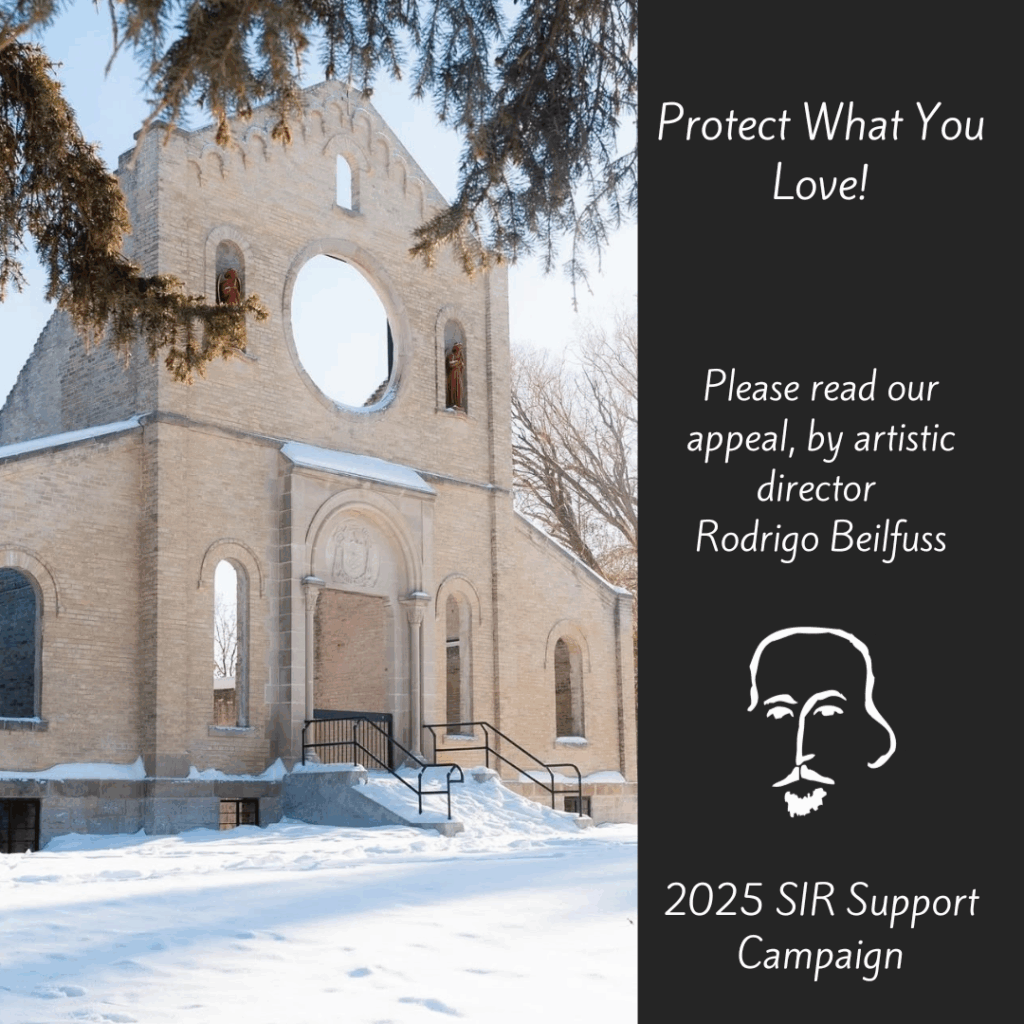
Ensuring the Magic of Outdoor Theatre Lives On Dear friend, What a year! I’ll never forget the night we staged the final duel of Macbeth under a stormy, electric sky. As Macbeth and Macduff clashed swords, the clouds above flashed and rumbled as if nature itself had decided to join our production team. It felt like the most breathtaking special effect we could have ever asked for – one that no theatre budget could ever buy! It’s these moments – when nature and art dance together – that make outdoor theatre at SIR so magical and utterly irreplaceable. Or the time during Waiting for Godot when, just as two characters strained to hear the heartbeat of another, a distant train whistle echoed through the park, blending the real world and the play’s world in a moment of pure, cheeky serendipity. And then, of course, there was the night when the power went out entirely at the park. Instead of cancelling, our resourceful crew lined up their cars and lit the stage with headlights. The show went on, bathed in this impromptu glow of shared determination. That night, the audience saw not just a performance, but a testament to the spirit of our community – the spirit that makes SIR truly unique. These are the types of wonderfully surprising moments that only SIR can offer. We live in search of surprise, in search of wonder, in search of something that lifts us from our everyday existence – and that’s exactly what this theatre company brings to life. But these moments are also fragile… SIR is a unique experience, and it’s worth protecting. And now, we need to share the reality: this past year’s climate instability has had a tangible impact. We faced 14 performances that were either modified or cancelled entirely due to conditions like wildfires, air quality issues, flash storms, and smoke . We had cast members struggling with vocal strain from the smoke, we had to bring in replacement actors on-book, and even I had to step in script-in-hand for a performance of Waiting for Godot (what a night that was!) All of this represents not just a brutal financial loss, but an existential challenge. It’s a hit to morale and a reminder of how fragile this beautiful endeavour is. Yet through it all, YOU – our audiences, our friends – have never lost faith in us. This is the moment to strengthen that belief. By supporting us now, you’re helping protect the wonder of theatre in nature, the joy of experiencing the greatest plays ever written under the open sky. We can’t do it without you, and with your help, we’ll continue to create these moments of surprise and wonder for years to come. Where Your Support Goes: Taking Action Together Your generous support will go directly into tangible actions that will keep SIR thriving and ensure our unique experience is protected into the future. Here are just a few of the critical areas where your donations will make a real difference: Enhancing Audience Care and Accessibility: With growing audiences, we need to ensure everyone has a comfortable experience. That means adding more porta-potties to reduce wait times, and make it easier for everyone to enjoy the show without missing a beat! We would also like to add more ‘stationary performances’ to our calendar, ensuring that patrons with mobility challenges can still enjoy a magical night out without the pressures of our promenade experience. Upgrading Our Infrastructure: We’re transitioning to a new digital system that will revolutionize how we communicate with you, streamline ticketing, and improve our overall audience engagement. This upgrade will make it even easier to stay connected and enhance your experience from the moment you get your ticket to the final bow. We also need to invest in additional chairs for your comfort and care! Expanding New Play Development: We’re proud of the new works that have emerged from SIR, like Dark Lady, The Player King and Pandora, which started right here in Winnipeg and have since been performed across provinces. We want to continue nurturing Manitoba talent, developing new plays, and sharing our unique voice with even wider audiences. New plays require deep care: workshops, many re-writes, try-out readings, time and resources! Ultimately, your support isn’t just about helping us survive; it’s about helping us thrive and continue to enrich the cultural life of Manitoba. Your support is about protecting what you love and ensuring that the magic of outdoor theatre continues to surprise and inspire us all. I can’t wait to share our plans for 2026 with you : expect romance, laughter, music, and pure storytelling…travelling from idyllic pastoral forests to action-packed mythical lands of the ancient world…  Please consider donating today so that SIR can continue to thrive, rain or shine. With your help, we’ll keep the wonder alive. With heartfelt gratitude,
November 24, 2025
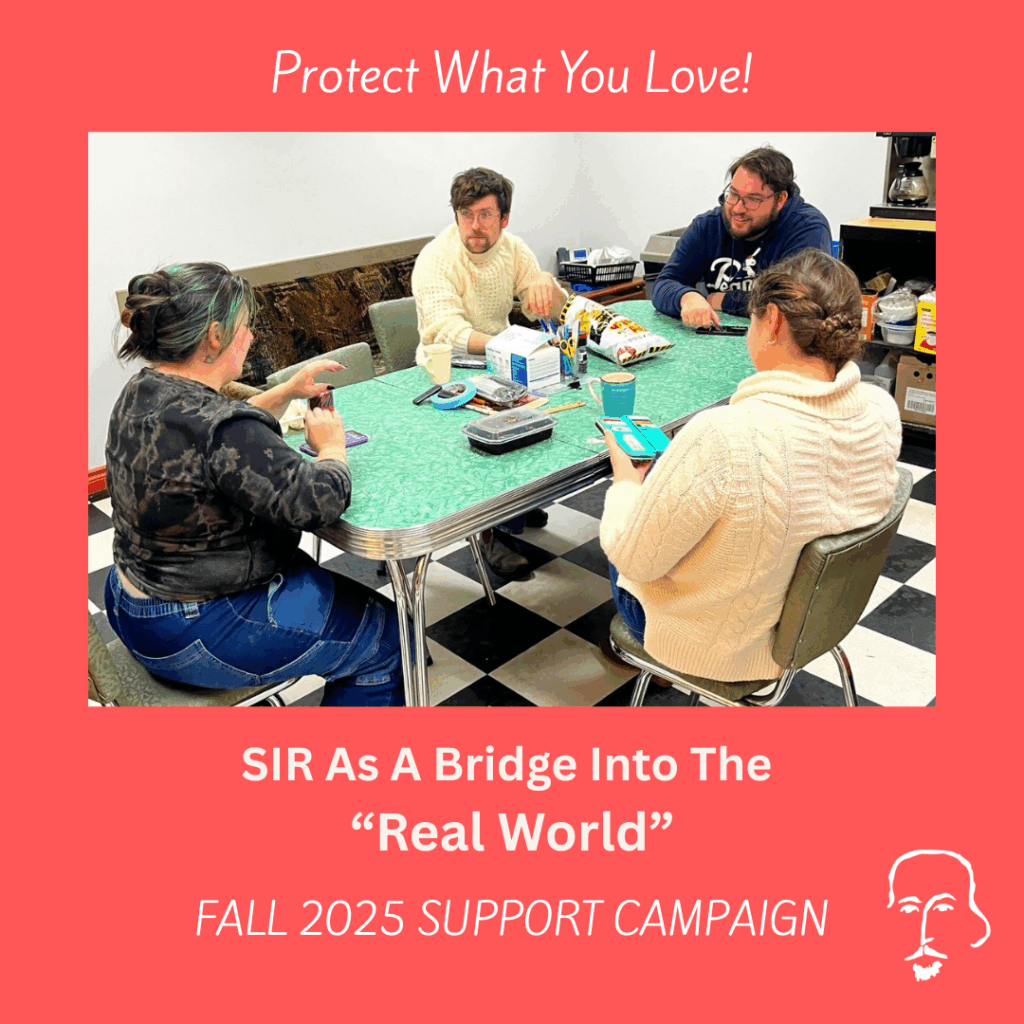
Hello friend, I’m currently acting in “A Number” at the Royal MTC’s Warehouse Theatre, and not only am I having a blast onstage in a brilliant play alongside one of Canada’s greats, Victor Ertmanis — but backstage, I’m surrounded by some truly lovely and familiar SIR faces: stage managers Katie Hoppa and Larissa Shabaga, technical director Alex Sinclair, head of lights Evan King, and assistant director (and SIR legend!) Sarah Constible. The other day, sitting in my dressing room, I heard giddy laughter coming from the kitchen backstage. It filled me with joy — enough that I had to snap that photo. Honestly, I felt like a doting dad. Katie, Larissa, Alex and Evan all worked with me at SIR this past summer during one of the most challenging seasons in our history — wildfires, cancellations, smoke, oof — and they were absolute heroes. And now, just a few months later, here we are again, together, doing something completely different but with the same joy, professionalism, and tenacity. I’m so proud of this team. I say “proud dad” because SIR gave them some of their very first professional contracts, and now they’re thriving at the celebrated RMTC. It made me think of my own journey. SIR was the first company to hire me, straight out of university in 2007, when I was just a kid with a thick Brazilian accent, acting alongside none other than the brilliant Sarah Constible in “The Merchant of Venice”. And now, somehow, I get to lead the company. I get to collaborate with artists like these — and (this is truly the best part of my job) I get to do what Jack Lemmon called “sending the elevator back down.” Through SIR, I now get to do what SIR once did for me: fostering new voices, emerging artists, and future leaders; giving them their first opportunities. That’s what SIR is. We are the bridge between training and the professional world. It is a wonderful responsibility — to support the next generation, to invest in emerging Manitoban talent; to mentor, build, and collaborate with the young artists who will continue to make this province shine across the country. That is worth protecting. That is worth supporting. Without SIR, I might never have made it to the RMTC stage — and I certainly wouldn’t have had that sweet moment of hearing laughter from the kitchen, prompting me to capture a photo of these wonderful humans I get to make art with today. How precious. Please consider supporting the next generation. Invest in Manitoban talent. Protect the company we love. Donate today . Yours, with deepest gratitude, xo 
By Rodrigo Beilfuss • October 19, 2025
Hello dear friend,
Show More